AI is revolutionizing how Power Purchase Agreements (PPAs) are managed in decentralized energy systems. These contracts, essential for renewable energy projects, are becoming increasingly complex due to the rise of distributed energy resources and multi-party agreements. Here’s how AI addresses these challenges:
- Efficiency Boost: AI-driven tools cut administrative tasks by up to 70% and legal review costs by 30–50%.
- Real-Time Insights: Predictive analytics optimize supply-demand trends, while natural language processing (NLP) extracts critical contract details.
- Centralized Management: Cloud-based platforms streamline compliance, track milestones, and secure sensitive data.
- Risk Mitigation: AI forecasts risks like market volatility or supplier issues, enabling proactive decision-making.
- Automated Workflows: From data extraction to obligation tracking, AI ensures contracts stay updated and compliant.
As decentralized energy grows, AI-powered platforms like Trackado simplify PPA management by automating workflows, ensuring compliance, and providing financial clarity. The future promises even smarter tools integrating blockchain and smart contracts for secure, efficient energy transactions.
Key Challenges in PPA Management for Decentralized Energy
Managing Power Purchase Agreements (PPAs) in decentralized energy systems brings unique hurdles that traditional systems aren’t equipped to handle. These challenges arise from the distributed nature of today’s energy markets, where numerous stakeholders, diverse data sources, and varying regulations must align. For organizations aiming to succeed in this shifting energy landscape, understanding these obstacles is critical.
Managing Multi-Party Agreements
Decentralized energy systems involve a tangled network of participants – utilities, independent power producers, aggregators, energy storage providers, and end-users – each with their own goals and responsibilities. Unlike simpler, one-on-one agreements, these multi-party PPAs demand careful coordination of terms, pricing, and schedules across all involved.
The complexity grows when stakeholders have varying risk tolerances and operational needs. Take, for instance, a peer-to-peer renewable energy network in the U.S. Midwest. It faced significant challenges in aligning contract terms, tracking energy flows in real time, and ensuring compliance across multiple jurisdictions. By adopting an AI-powered contract management platform, the network was able to boost transparency, automate settlements, and cut down administrative burdens.
Frequent changes to contracts add another layer of difficulty. Market price shifts, regulatory updates, and operational adjustments often require quick contract modifications. Without the right tools, organizations risk working with outdated agreements or missing critical updates that could affect their obligations.
"Without Trackado, we often found it difficult to find a specific contract that we knew we had, but it was hard to locate due to our various storage methods. Furthermore, going through the different stages of business input, drafting, approvals and signature was difficult without a formalized process and tool."
- Kieran Lynch, Head of Legal and Compliance, Rakuten Europe
Dynamic pricing and real-time energy trading further complicate matters. AI-powered negotiation tools can help by simulating optimal contract structures and adjusting terms in real time, reducing disputes and speeding up negotiations. These issues underscore the importance of integrated systems for managing data and contracts effectively.
Data Fragmentation and Real-Time Insights
One of the toughest challenges in managing decentralized PPAs is dealing with fragmented data. Information comes from a variety of sources – metering systems, contract repositories, market platforms, and operational databases – making it hard to get a clear, unified view of contract performance and obligations.
This disjointed setup creates several issues. Companies may miss key milestones, overlook compliance requirements, or fail to adapt their energy procurement strategies. Static contract terms can quickly become outdated in the face of real-time market changes, leading to disputes or missed cost-saving opportunities.
"Before using Trackado, managing our contracts was frustrating. We had a structure in place to store our contracts, but we didn’t have a nice overview which also gave us timely notifications of when they were expiring. This caused deals to renew or end automatically without us having the right infrastructure to avoid this from happening."
- Yiannis Karavassilis, COO, CloudKid
AI-driven platforms can tackle these problems by aggregating and analyzing data from multiple sources, offering real-time insights that improve decision-making. For example, multi-agent systems have proven effective in peer-to-peer energy trading, enhancing coordination and optimizing performance.
Regulatory Compliance and Data Security
Beyond coordination and data challenges, regulatory and security demands further complicate PPA management. In the U.S., energy companies must navigate a patchwork of federal, state, and local regulations, which can vary widely and change frequently. For organizations operating across state lines, monitoring compliance becomes both complex and resource-intensive.
Data security is another pressing concern. PPAs include sensitive financial, operational, and strategic information that must be safeguarded against breaches. In decentralized systems, the sheer number of access points and participants increases vulnerabilities, making traditional security measures insufficient.
Meeting standards like NERC CIP and adhering to data privacy laws is essential, but manual compliance checks are time-consuming and prone to errors. Automated systems that continuously monitor contracts and flag potential issues are becoming indispensable. For publicly traded companies or their subsidiaries, audit requirements add another layer of complexity, demanding detailed documentation and easy access to contract data.
"Trackado also improves our audit processes! We are a subsidiary of a listed company, so our audit requirements are high and at a recent audit, when I was able to access Trackado and simply export a list of new contract partners for the year I knew we have made the right choice."
- Kieran Lynch, Head of Legal and Compliance, Rakuten Europe
Emerging technologies like smart contracts and blockchain are helping to address these challenges. Smart contracts can automate execution based on predefined conditions, reducing human error and minimizing fraud risks. Blockchain, with its tamper-proof transaction records, enhances transparency and trust among parties.
Additionally, AI-supported cybersecurity measures and automated compliance tools ensure contracts meet regulatory standards while safeguarding sensitive data. As the energy sector becomes more digital and decentralized, these solutions are vital for managing the growing complexities and risks effectively.
AI-Powered Tools for PPA Management
AI is reshaping how companies manage Power Purchase Agreements (PPAs) in decentralized energy systems. These tools tackle the complexities of multi-party contracts, fragmented data, and regulatory compliance by automating workflows and delivering real-time insights. The transition from manual processes to AI-driven strategies is changing the way energy companies operate in today’s fast-moving markets. Below, we’ll explore how AI enhances data extraction, risk analysis, and obligation tracking for PPA management.
Automated Contract Data Extraction with AI
AI-powered tools for contract data extraction rely on natural language processing (NLP) and machine learning to identify and pull out key terms, dates, and financial details from PPAs. This eliminates the need for manual reviews, reduces errors, and speeds up onboarding.
For companies managing large portfolios, this technology offers a scalable solution across different regions. AI scans uploaded documents, interprets the contract language, and automatically organizes the extracted details into structured databases.
For instance, Trackado uses AI-driven data extraction to centralize and simplify contract management. Users upload their PPAs, and the system processes the text to extract essential details, which are then structured for easy access and reporting.
This capability is particularly useful when dealing with diverse contract formats across multiple jurisdictions. AI systems can adapt to variations in contract language, standardize data, and ensure accurate information capture, no matter how complex the document. The result is a centralized, searchable database that provides instant access to critical contract information.
AI for Risk Analysis and Predictive Insights
Risk management in PPA operations has been revolutionized by AI, which aggregates and analyzes extensive datasets on factors like counterparty performance, market volatility, and regulatory changes. Using machine learning, these systems identify patterns and predict risks such as supplier defaults, price swings, or compliance issues, enabling companies to address potential problems before they escalate.
AI-powered supplier intelligence tools take partner evaluation to the next level by compiling financial, regulatory, and operational data to assess renewable energy partners. These systems can highlight suppliers with histories of delays or compliance violations, helping companies make more informed decisions.
AI doesn’t stop at identifying risks – it also forecasts potential issues by analyzing historical data, market trends, and external factors. This allows energy companies to refine procurement strategies, renegotiate contracts, or implement hedging measures to minimize anticipated risks.
Negotiation tools driven by AI simulate contract scenarios to optimize terms and reduce market risks. These frameworks speed up deal-making while ensuring that procurement strategies align with both financial and sustainability objectives in the ever-changing energy market.
AI also supports continuous portfolio optimization by dynamically adjusting procurement strategies in response to real-time market conditions, asset performance, and risk assessments. This adaptive approach helps operators boost financial returns while maintaining operational stability.
Automated Tracking of Obligations and Milestones
AI plays a crucial role in ensuring that every contractual obligation and milestone is met, complementing its risk management capabilities.
Managing multiple PPAs can be overwhelming, but AI automates the tracking of contract terms, deadlines, and performance metrics. It generates automated alerts and reminders for key dates, such as payments, renewals, or compliance checks, ensuring nothing falls through the cracks.
This is especially critical in decentralized energy systems, where missing a single deadline can disrupt multiple agreements. AI systems monitor everything from payment schedules to performance benchmarks and regulatory deadlines, keeping all parties aligned with contract requirements.
AI also provides financial forecasting, helping companies anticipate cash flows and allocate resources more effectively. This is particularly helpful when managing diverse energy portfolios with varying payment and performance structures.
Trackado’s milestone tracking feature is a great example of how AI simplifies this process. It offers automated reminders, task-based workflows, and integrated e-signing to ensure organizations stay on top of their obligations. The platform also provides full visibility into costs, revenues, and deadlines across entire contract portfolios.
Additionally, AI helps with regulatory compliance by cross-referencing contract terms with current regulations. It flags inconsistencies or gaps that could lead to non-compliance, giving companies a proactive way to stay ahead of regulatory challenges.
sbb-itb-49df6ae
Trackado: A Smart Solution for PPA Management
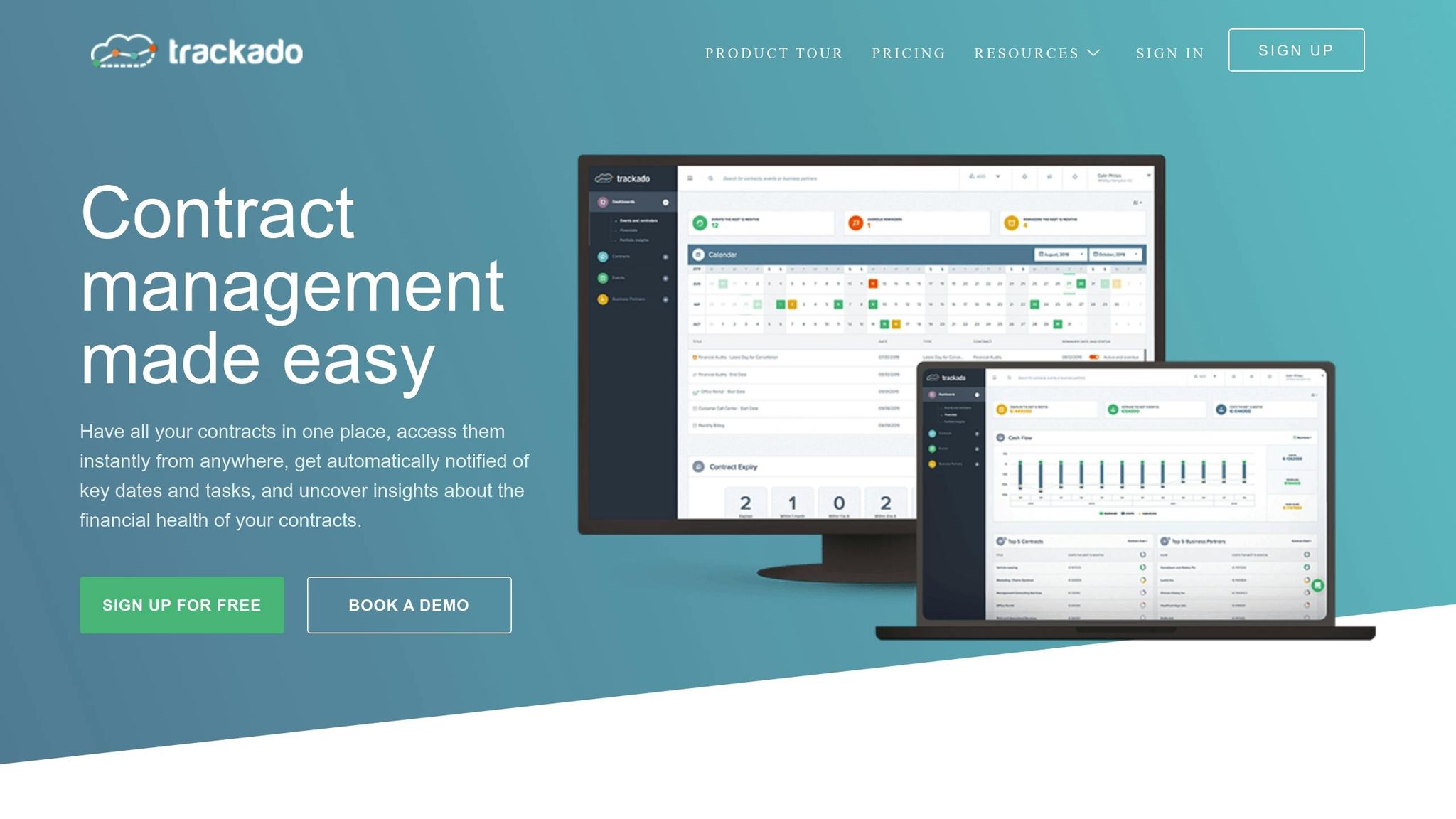
Handling Power Purchase Agreements (PPAs) in decentralized energy systems can be a complex task, especially with multi-party contracts and strict compliance requirements. Trackado simplifies this process by combining AI-driven automation with centralized management, offering a streamlined solution for PPA oversight.
Rather than relying on scattered systems, Trackado provides a unified platform where all contract-related activities come together effortlessly. Here’s how it helps manage PPAs more efficiently in decentralized energy setups.
Key Features for Managing Decentralized Energy PPAs
Trackado offers centralized contract storage, serving as a single, organized repository for all PPA documents. This ensures that critical information is always accessible and can be categorized by partner, department, or other criteria – ideal for navigating contracts across various states.
The platform’s AI-powered data extraction feature automates the processing of uploaded PPA documents. It identifies and pulls out important details like pricing terms, renewal dates, compliance clauses, and performance metrics. This automation not only saves time but also minimizes manual errors. For energy companies juggling contracts across multiple jurisdictions, this kind of standardization is a game-changer.
Automated reminders and milestone tracking keep everything on schedule. Whether it’s payment deadlines, performance reviews, or regulatory compliance dates, the system sends timely alerts to avoid disruptions in multi-party agreements.
Trackado also allows for customization with task-based approval workflows and custom data fields. For example, companies can track renewable energy certificates, capacity factors, or specific state regulations. Its built-in e-signature functionality further simplifies contract execution, enabling remote deal closures while ensuring legal compliance.
Financial management is another strength. The platform provides full financial visibility by consolidating billing details, costs, and revenue streams in one place. This clarity helps energy managers assess portfolio performance, spot areas for improvement, and make informed procurement decisions. Plus, financial data can be exported in formats compatible with existing ERP and accounting systems.
These features not only simplify contract management but also provide the foundation for better oversight, as discussed in the next section on compliance and transparency.
Improving Compliance and Transparency in PPA Management
Compliance in the U.S. energy sector requires careful attention to both federal and state regulations. Trackado’s secure, cloud-based infrastructure – hosted in European data centers with enterprise-grade SSL encryption – keeps sensitive contract and financial data protected against unauthorized access.
The platform’s audit trail capabilities maintain a detailed record of every contract action, from initial upload to final execution. This is invaluable for regulatory reviews and internal compliance checks, enabling easy generation of reports that demonstrate adherence to governance and regulatory standards.
Trackado also offers automated compliance checking, which cross-references contract terms with current regulations to flag any inconsistencies. Meanwhile, real-time portfolio oversight provides stakeholders with up-to-date insights on contract statuses, financial performance, and compliance metrics. This ensures informed decision-making, even in fast-changing market conditions.
Benefits of AI-Driven Contract Management with Trackado
By integrating AI across its platform, Trackado boosts efficiency and lowers risks. According to industry analysis, companies using Trackado typically see a 30% reduction in administrative costs and 40% faster contract execution times compared to manual processes.
Another key advantage is accuracy. AI-powered data extraction and automated workflows reduce the chance of human error, which is especially important when managing large contract portfolios. Even small mistakes in these settings can lead to costly compliance issues or financial setbacks.
"Before using Trackado, managing contracts without a proper solution was frustrating and inconsistent. We used a spreadsheet, which made it difficult to gain any insights or analysis from the data. There was also little central legal team oversight of key contract dates. With Trackado, we were able to analyze and draw insights from our contract library, seeing common types of contracts and being able to draw efficiencies from this." – Peter Skeen, Head of Legal, Procurement and Company Secretarial, Good Energy
Trackado’s AI features also enable scalability. Energy companies can expand their contract portfolios without significantly increasing administrative workloads. Its predictive capabilities help assess risks and optimize portfolios by spotting patterns in supplier performance, market trends, and contract outcomes. Finally, its integration flexibility ensures smooth connectivity with ERP, CRM, and financial systems, creating a cohesive operational environment for business intelligence and reporting.
Conclusion and Future Outlook
Key Takeaways on AI in PPA Management
AI is revolutionizing how organizations manage Power Purchase Agreements (PPAs) in decentralized energy systems. By automating processes like contract administration, data extraction, and risk analysis, AI significantly reduces manual workloads while improving decision-making speed and contract accuracy.
This shift from traditional methods to AI-driven solutions marks a major advancement. Instead of relying on manual data entry and static contracts, organizations can now benefit from automated analysis and dynamic, real-time optimization.
AI also enhances portfolio management. It allows organizations to adapt procurement strategies dynamically, refine pricing models, and improve forecasting accuracy. This leads to better financial results and stronger sustainability outcomes. On the legal front, AI tools can extract key contract terms, identify inconsistencies, and benchmark agreements against industry norms, cutting down legal delays and speeding up contract execution.
The integration of AI with blockchain and smart contracts further boosts security, transparency, and efficiency in energy transactions.
The Future of AI in Decentralized Energy Markets
While current AI solutions are already reshaping PPA management, the future holds even greater potential for transformation. As AI continues to evolve, its deeper integration with blockchain and smart contracts will enable more autonomous, secure, and efficient energy trading. Multi-agent systems are emerging as a promising tool for peer-to-peer energy trading, autonomously managing distributed resources and optimizing transactions.
In the U.S., technologies like virtual power plants and synthetic PPAs are positioning the market to better handle distributed renewable resources and manage volatility. These AI-driven innovations offer new ways to enhance grid stability and refine procurement strategies.
The rapid adoption of AI in decentralized energy systems is also driving advancements like federated learning and edge AI. These technologies empower microgrids to optimize load management and energy distribution while maintaining data privacy. This transition from static contract monitoring to real-time, adaptive management represents a significant step forward.
However, challenges like regulatory uncertainty, scalability, and data security remain. Overcoming these hurdles will require collaboration among technology developers, regulators, and industry stakeholders to establish interoperable standards, strong cybersecurity measures, and adaptive regulatory frameworks.
To prepare for this evolving landscape, organizations should invest in digital infrastructure and train their teams in AI and data analytics. Partnering with technology providers to test advanced contract management solutions can help build the necessary expertise. Engaging with regulators to shape adaptive policies will ensure compliance with data security and privacy standards while fostering innovation in the sector.
The convergence of AI, blockchain, and multi-agent systems is setting the stage for a decentralized, transparent, and resilient energy market. As these technologies mature, they promise to deliver greater flexibility and cost savings in PPA management, making decentralized energy systems more efficient and accessible for organizations of all sizes.
FAQs
How does AI improve the management of Power Purchase Agreements (PPAs) in decentralized energy systems?
AI is transforming how Power Purchase Agreements (PPAs) are managed in decentralized energy systems by simplifying intricate processes such as data extraction, risk evaluation, and task automation. These tools can process massive datasets in no time, pinpoint potential risks, and handle routine tasks automatically – saving both time and reducing the likelihood of human error.
Platforms like Trackado take contract management to the next level by centralizing all documents, automating reminders, and offering features like AI-driven data extraction, milestone tracking, and built-in e-signature capabilities. These tools make handling multi-party agreements smoother, ensuring that obligations are fulfilled and critical deadlines are always on track.
How can AI-driven tools like Trackado improve risk management and compliance in PPA management?
AI-driven platforms such as Trackado make managing risks and ensuring compliance in PPA management much easier. By centralizing contracts and automating reminders for important dates, it helps ensure that obligations, renewals, and key milestones are never overlooked.
Trackado’s features, including AI-based data extraction, customizable fields, and milestone tracking, offer a clear view of costs, revenues, and deadlines. These tools not only simplify audits and minimize human errors but also enable businesses to stay ahead of risks and maintain compliance effortlessly.
How can AI, blockchain, and smart contracts revolutionize decentralized energy transactions?
AI, when paired with blockchain and smart contracts, is reshaping how decentralized energy transactions work. AI tools can process massive amounts of energy data in real time, offering sharper insights for decision-making and better demand predictions. Meanwhile, blockchain provides a secure, transparent, and tamper-resistant way to record transactions, and smart contracts handle agreements automatically – no middlemen required.
This trio of technologies can simplify tasks like billing, energy trading, and compliance, cutting down on costs and inefficiencies. For instance, smart contracts can trigger payments automatically once specific conditions, like energy delivery, are fulfilled. By integrating these systems, energy transactions become more efficient, trustworthy, and aligned with the growth of decentralized energy networks.