Data analytics is reshaping how Power Purchase Agreements (PPAs) are priced. These long-term contracts, critical for renewable energy financing, face challenges due to market volatility, regulatory changes, and evolving energy dynamics. Traditional manual pricing methods rely on spreadsheets and expert judgment but struggle with accuracy, speed, and risk assessment in today’s fast-paced energy markets.
Modern data-driven tools, such as Trackado, address these challenges by using AI, machine learning, and real-time analytics. These platforms automate data collection, improve forecasting, and allow quick adjustments to market changes. They enhance accuracy, reduce human error, and streamline processes, enabling faster, more reliable pricing decisions.
Key differences between manual and data-driven approaches include:
- Accuracy: Manual methods are prone to errors, while data-driven tools use AI for precise modeling.
- Speed: Manual pricing can take weeks; automated tools complete tasks in minutes.
- Risk Management: Manual methods rely on limited historical data, while advanced tools simulate diverse scenarios.
- Market Responsiveness: Manual updates are slow, whereas dynamic algorithms adjust instantly.
For businesses navigating volatile energy markets, transitioning to data-driven pricing tools is a practical choice to improve efficiency, reduce risks, and stay competitive.
1. Manual PPA Pricing Methods
Manual PPA pricing methods represent a more traditional approach to determining power purchase agreement (PPA) rates. Many renewable energy developers and utilities still rely on these methods, which follow a step-by-step process: gathering historical data, creating basic predictive models, analyzing market trends, assessing risks, planning scenarios, making dynamic pricing adjustments, and monitoring results over time.
At the core of these methods are spreadsheet-based calculations and isolated data storage. Analysts manually collect historical pricing data, feed it into Excel models, and conduct market research. While this process has been in use for years, it increasingly struggles to meet the fast-paced demands of today’s energy markets.
Accuracy and Transparency
One of the biggest challenges with manual methods is the potential for human error and subjective decision-making. Although spreadsheets offer a degree of transparency by documenting each calculation, they lack the precision needed to navigate today’s dynamic market conditions. For example, factors like real-time demand changes, fluctuating production costs, and inventory levels require advanced forecasting capabilities. Manual systems, which lean heavily on historical trends and analyst expertise, often fall short of accurately simulating market behavior or testing scenarios before decisions are made.
Speed and Efficiency
Manual pricing is also time-intensive, often requiring days or even weeks to process data and complete analyses. This delay makes it difficult to adjust prices in real time, which can lead to missed opportunities in a fast-moving market. Without the ability to continuously monitor and refine pricing strategies, businesses risk relying on outdated insights that may no longer align with current conditions.
Risk Mitigation
When it comes to managing risk, manual methods rely heavily on the experience and judgment of analysts rather than leveraging advanced predictive tools. While these methods include steps to evaluate potential risks, they lack the ability to simulate multiple market scenarios with accuracy. Complex variables – such as contract terms, customer profiles, and varying pricing structures – are often difficult to account for using manual systems. This can result in risks only becoming apparent after a contract is signed. The challenge is even greater when trying to diversify contract types or integrate additional services, like solar-plus-storage or energy efficiency programs. Recalculating these scenarios manually can delay decision-making and reduce the ability to optimize revenue.
Adaptability to Market Changes
Manual pricing methods struggle to keep up with the rapid changes in today’s energy markets. The process of gathering data, analyzing trends, and adjusting prices is inherently slow, creating a lag between shifts in market conditions and pricing updates. This delay is especially problematic in the renewable energy sector, where factors like inventory levels, demand spikes, and competitive pressures can shift quickly. In the U.S., where market dynamics are particularly fluid, manual methods often fall behind. Periodic reviews and updates simply can’t match the speed required to capitalize on peak demand periods or respond to competitor actions.
These limitations emphasize the growing need for faster, more data-driven pricing tools that can adapt to the complexities of modern energy markets.
2. Data-Driven PPA Pricing Tools (e.g., Trackado)
Gone are the days of relying on manual, error-prone processes for pricing Power Purchase Agreements (PPAs). Data-driven pricing tools have revolutionized the way renewable energy companies manage contracts. By integrating artificial intelligence, machine learning, and real-time analytics, these platforms automate data collection, improve forecasting, and enable quick adjustments to market changes.
Modern tools combine historical pricing data, real-time market updates, demand forecasts, competitor rates, and regulatory changes into a single, centralized system. This streamlined approach eliminates the inefficiencies of manual methods, offering a cohesive and comprehensive view of all contract-related information.
Accuracy and Transparency
One of the standout benefits of these tools is the precision they bring to pricing. With AI-powered data extraction, platforms can process contract terms and market data automatically, reducing the risk of human error. They also analyze large datasets to uncover pricing patterns and trends that would otherwise go unnoticed.
Transparency is another key strength. Centralized data storage and clear audit trails ensure every pricing decision is backed by evidence. These systems document the rationale behind contract terms, making it easier for stakeholders to understand and trust the process. Features like customizable fields and automated reporting ensure that all relevant details are consistently captured, no matter the market conditions.
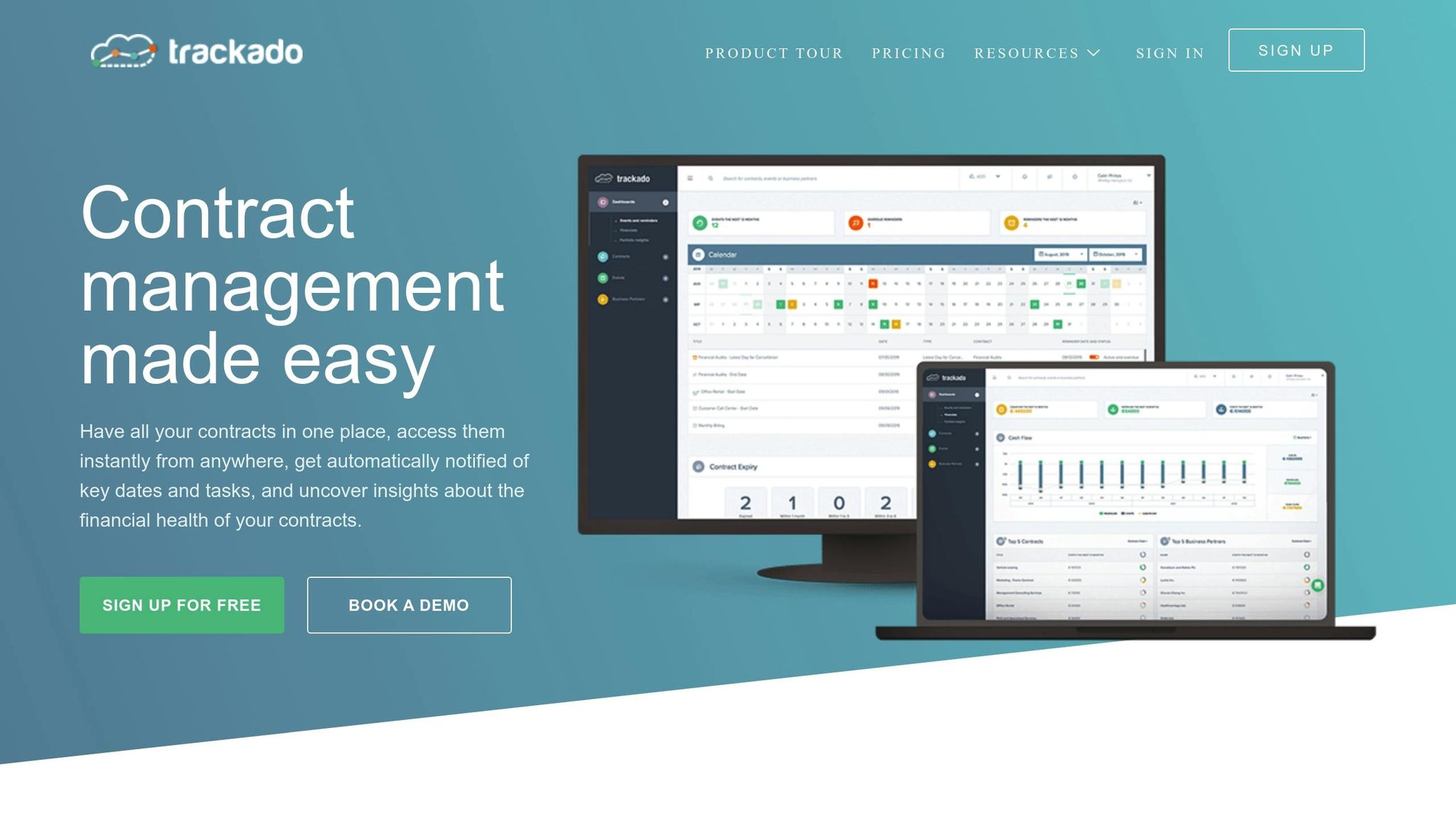
For example, platforms like Trackado make contract management more transparent by offering intuitive dashboards. These dashboards provide a clear view of costs, revenues, and key dates, ensuring critical details are accessible to authorized team members. This reduces the risk of missed terms or pricing errors.
Speed and Efficiency
In addition to accuracy, these tools dramatically speed up the pricing process. Tasks that once took days or even weeks can now be completed in minutes thanks to automated workflows, task-based approvals, and integrated e-signing. This rapid turnaround is essential in competitive markets, where delays can mean lost opportunities.
Automated reminders help teams stay on top of deadlines, while e-signing capabilities eliminate the back-and-forth delays of traditional contract processes. These time savings allow teams to focus more on strategy and less on administrative tasks.
The efficiency extends beyond initial pricing to ongoing contract management. Features like milestone tracking and automated notifications keep everyone informed about important dates and obligations, minimizing the risk of costly oversights.
Risk Mitigation
Energy markets are inherently unpredictable, but these platforms excel at managing risks. Advanced analytics tools include risk assessment modules that evaluate factors such as market volatility, counterparty creditworthiness, regulatory changes, and operational risks. With features like scenario planning and Monte Carlo simulations, teams can test various market conditions and assess their impact on contract profitability before committing.
This proactive approach to risk management ensures companies can respond to potential issues before they escalate. Continuous monitoring of market conditions and contract performance allows these tools to alert users to emerging risks and suggest pricing adjustments to maintain profitability. By simulating thousands of potential scenarios, these platforms provide a level of confidence that manual methods simply cannot achieve.
Centralized contract data also plays a critical role in reducing operational risks. By keeping all stakeholders aligned and automating compliance tracking, these systems help organizations meet regulatory requirements and avoid penalties tied to missed deadlines or overlooked obligations.
Adaptability to Market Changes
Energy markets are dynamic, and pricing tools need to keep up. With dynamic pricing algorithms, these platforms can adjust rates in real-time based on supply and demand, inventory levels, and competitive pressures. This adaptability is especially valuable in the U.S., where regulatory shifts and grid conditions can change quickly.
By integrating real-time market data, these tools ensure pricing models reflect current conditions rather than outdated trends. When demand surges or new regulations emerge, the platform updates pricing calculations instantly, providing recommendations that align with the latest market realities.
The growing adoption of digital pricing solutions in U.S. markets highlights the shift toward data-driven contract management. These tools not only simplify complex pricing tasks but also position companies to anticipate and capitalize on market opportunities. With predictive modeling, organizations can forecast market changes, allowing them to act before conditions shift. This forward-thinking capability is a game-changer, enabling businesses to stay ahead in an increasingly competitive and fast-moving energy landscape.
sbb-itb-49df6ae
Pros and Cons
When it comes to optimizing PPA pricing through data analytics, understanding the trade-offs between manual and data-driven approaches is crucial. Both methods bring unique strengths and challenges, particularly in areas like accuracy, efficiency, risk management, and responsiveness to market changes. The table below highlights how these two approaches stack up against each other:
| Criteria | Manual PPA Pricing Methods | Data-Driven PPA Pricing Tools |
|---|---|---|
| Accuracy and Transparency | Relies on human expertise, offering clear reasoning but limited by processing capacity and prone to errors. | AI-driven analytics achieve about 95% accuracy in predictive modeling, with detailed audit trails and centralized oversight. |
| Speed and Efficiency | Manual analysis can take days or even weeks for complex contracts. | Automated workflows handle tasks in minutes, integrating e-signing and milestone tracking. |
| Risk Mitigation | Depends on historical data and reactive adjustments, offering limited foresight. | Advanced tools simulate diverse scenarios and monitor markets continuously, preparing for various outcomes. |
| Adaptability to Market Changes | Static models require periodic manual updates and intervention. | Real-time algorithms dynamically adjust to market shifts and regulatory updates. |
Data-driven tools, powered by AI, excel in identifying pricing trends and eliminating errors like transcription mistakes. The speed advantage becomes especially important in competitive bidding, where manual processes often create bottlenecks, particularly when managing large volumes of contracts. Industry feedback underscores how manual methods, with fragmented workflows and outdated contract storage practices, can hinder overall efficiency.
Risk management is another area where the two approaches differ significantly. Manual strategies often rely on historical trends and limited scenario analysis, while data-driven platforms can simulate a broader range of market conditions, giving organizations a stronger foundation to navigate uncertainties.
However, adopting data-driven tools isn’t without its hurdles. Initial setup costs, employee training, and the need for high-quality, integrated data can pose challenges. Many organizations also note that traditional spreadsheets lack the analytical depth needed for modern contract management.
Cost is another factor to consider. While manual methods might seem cheaper upfront, hidden expenses – like inefficiencies, missed opportunities, and error correction – can quickly add up. On the other hand, data-driven tools require an upfront investment but deliver measurable benefits through improved accuracy, faster processing, and better risk management.
Ultimately, data-driven solutions outshine manual methods in most key areas. As contract volumes grow, manual processes often become unwieldy, while digital platforms scale seamlessly, maintaining efficiency and accuracy. These comparisons provide a solid foundation for determining which approach best suits your organization’s needs.
Conclusion
When it comes to navigating U.S. energy markets, data-driven tools leave manual methods in the dust, excelling in accuracy, speed, and risk management.
Manual pricing methods, which depend on static spreadsheets and outdated historical data, simply can’t keep up with the fast-moving dynamics of the American energy sector. Tasks that take days – or even weeks – with manual analysis are completed in minutes with automated workflows. This speed is vital in competitive bidding scenarios, where delays can mean losing out on critical opportunities.
Modern data-driven platforms do more than just respond to market changes – they actively monitor conditions and simulate a range of possible outcomes. This ability to anticipate and adapt in real time gives businesses a strategic edge that manual methods just can’t match. It’s not about reacting anymore; it’s about staying ahead of the curve.
For businesses operating in volatile energy markets, the solution is straightforward: adopt advanced contract management platforms without delay. Tools like Trackado bring everything under one roof, automating workflows, providing detailed financial insights, and eliminating inefficiencies with features like automated reminders, milestone tracking, and integrated e-signing.
As contract volumes grow and market conditions become even more unpredictable, sticking to manual processes isn’t just inefficient – it’s a liability. Digital platforms, on the other hand, scale effortlessly and empower businesses with real-time insights to make smarter, faster decisions. Companies that continue relying on manual PPA pricing risk falling behind competitors who are leveraging data to stay ahead.
In short, embracing data analytics isn’t just a smart move – it’s the key to transforming energy procurement into a proactive, strategic advantage.
FAQs
How do data-driven tools improve pricing accuracy and minimize errors in Power Purchase Agreements?
Data-driven tools are transforming the way Power Purchase Agreements (PPAs) are priced, offering a level of precision and efficiency that manual methods simply can’t match. By harnessing advanced analytics, these tools can process vast datasets, spot trends, and craft pricing strategies that are both accurate and grounded in solid data. This minimizes the risk of human error and ensures decisions are built on dependable insights.
Take Trackado, for instance. This contract management solution streamlines the entire PPA management process. By centralizing all your documents and automating essential tasks, it not only keeps you organized but also delivers actionable financial insights. The result? Smarter pricing decisions and seamless compliance with contractual obligations.
What challenges or costs might arise when switching from manual to data-driven PPA pricing strategies?
Switching from manual methods to a data-driven approach for PPA pricing isn’t without its hurdles. One of the most noticeable challenges is the upfront cost of acquiring new tools and technologies. On top of that, there are recurring expenses for keeping those tools updated and functional over time.
Your team might also need specialized training to get comfortable with analytics tools and to make sense of the data they provide. Adjusting to this new system often involves a period of adaptation, as workflows and processes are reshaped to make the most of the data-driven strategy.
How can data-driven tools help businesses stay competitive in the fast-changing energy market?
Data-driven tools give businesses the ability to respond swiftly to changes in the energy market by simplifying contract management and enhancing decision-making processes. With features such as automated reminders, centralized document storage, and comprehensive financial insights, these tools ensure companies can meet critical deadlines, manage obligations effectively, and maintain a clear understanding of their costs and revenues.
Take Trackado, for example. This platform streamlines contract organization and tracking, enabling businesses to stay ahead of market fluctuations. By bringing essential information together in one place and automating repetitive tasks, these tools free up teams to concentrate on strategic goals, helping them stay competitive in an ever-changing landscape.