
Hotels manage numerous vendor contracts across services like food supply, IT, and maintenance. Without a clear system, outdated agreements or missed deadlines can lead to disputes and revenue loss – averaging 9% in the hospitality industry. Version control solves this by tracking contract changes, approvals, and deadlines in a centralized system, ensuring accuracy and compliance.
Key Takeaways:
- Centralized Storage: Tools like Trackado store contracts securely, making them easy to access and update.
- Version Tracking: Assign version numbers, track revisions, and maintain audit trails to avoid errors.
- Automated Alerts: Metadata like renewal dates triggers reminders, preventing missed deadlines.
- Clear Ownership: Assign contract responsibilities to avoid confusion.
- Approval Workflows: Set tiered approval processes based on contract value.
Hotels using version control save time, reduce risks, and improve vendor management. Systems like Trackado streamline these processes, ensuring every property operates with the correct contract version.
Mapping Vendor Contracts and Setting Version Control Requirements
Start by building a comprehensive inventory of all contracts. Many hotel groups manage more contract types than they might expect, and without a detailed overview, it’s easy to encounter issues like unclear ownership or confusion over versions.
Identifying Contract Types and Assigning Owners
Hotel vendor contracts generally fall into five main categories:
- Operational services: Includes laundry, housekeeping, and landscaping.
- Food and beverage supply: Covers agreements with suppliers for restaurants, bars, and catering.
- Infrastructure and IT: Encompasses property management systems, Wi-Fi providers, and other tech services.
- Legal and structural agreements: Includes franchise agreements and property leases.
- Commercial contracts: Covers corporate booking agreements, banquet proposals, and similar deals.
This categorization helps create a clear structure for managing contracts while ensuring compliance. Ownership is equally important. For example, IT and franchise agreements often fall under corporate legal or executive teams, while property-level teams typically handle local food and beverage or laundry contracts. Assigning clear accountability for each agreement is key to avoiding confusion.
Vendor agreements are the backbone of smooth hotel operations, covering everything from food and beverage supply to linen services, maintenance, and technology. Without clear version control, even a well-negotiated contract can lose value through outdated terms or missed obligations.
To get started, create a contract inventory that lists each agreement, its category, and its designated owner. This step helps close any accountability gaps before formalizing policies.
Setting Version Control Policies
Once you’ve identified all contracts and assigned owners, the next step is to establish clear rules for version control. Every contract should have a unique version number, a revision date, and a standardized filename for easy identification. Editing access should be restricted to assigned owners, while other departments should have read-only access. For property-specific amendments – such as changes to a local food supplier agreement – set up a separate approval process to ensure all updates are properly logged and linked to the master agreement.
When a contract is updated, the system should automatically mark older versions as superseded and notify all relevant stakeholders. This ensures no one is working from outdated documents.
These processes should be supported by audit trails that track every change, creating a reliable record of updates.
Maintaining Audit Trails and Access Logs
Audit trails are more than just a compliance requirement – they provide a clear record of who made changes and when. This is essential for brand audits or resolving vendor disputes.
A strong contract management system logs not just the documents themselves but every action taken on them – who created a record, who edited it, when it was approved, and who had access. This level of detail is essential for resolving disputes and passing brand audits.
Each modification – whether it’s a pricing adjustment, a term extension, or an added clause – should be timestamped and tied to a specific user. This level of detail is especially critical for franchise agreements and management contracts, where brand compliance teams may require documentation during audit cycles. By using automated audit logging within a centralized contract repository, you can ensure accurate records without the risk of manual tracking errors.
sbb-itb-49df6ae
Setting Up a Centralized Contract Repository
Once you’ve established version control policies and assigned ownership, the next step is setting up a centralized, cloud-based repository. This system allows corporate legal teams and property managers to quickly locate, update, and manage contracts, ensuring everyone operates on the same page.
"Centralized systems ensure everyone – from procurement leaders to finance controllers – operates with the same version of truth." – Joseph Friedmann, Ready Bid
Organizing Contracts with Metadata and Hierarchies
A well-structured repository is essential for efficient contract management. Use a layered hierarchy: portfolio → region → property → contract. This setup provides corporate teams with a broad overview while enabling property managers to focus on their specific locations. It also supports compliance tracking and renewal management across the entire portfolio.
Metadata is the backbone of a searchable and actionable repository. Each contract should include fields that go beyond the document itself. Here’s a breakdown of key metadata categories for hotel vendor contracts:
| Metadata Category | Recommended Fields | Purpose |
|---|---|---|
| Property | Property Name, Region, Portfolio ID | Enables hierarchical filtering and reporting |
| Type | HMA, Franchise, Vendor SLA, OTA, PMS | Facilitates specialized reviews by category |
| Financials | Base Fee %, Incentive Structure, Agreement Value | Tracks performance and spending |
| Compliance | Brand Standards, Performance Test Dates | Ensures alignment with franchise/owner requirements |
| Lifecycle | Effective Date, Expiry Date, Notice Period | Automates renewals and prevents lapses with a contract renewal planner |
For Hotel Management Agreements (HMAs), it’s especially important to store specific data fields like base fee percentages, incentive fee structures, and performance test calculation periods. These details, while easy to overlook, are critical during owner reviews or audits.
Once the repository is organized, the next step is defining access roles to ensure users only interact with the contracts relevant to their responsibilities.
Configuring Access Control and User Roles
Role-based access control (RBAC) is key to maintaining security while enabling appropriate access. Start by setting up four primary user roles:
| User Role | Access Level | Typical Contract Types |
|---|---|---|
| Corporate Legal/Finance | Full Read/Write/Admin | All properties, HMAs, Franchise Agreements |
| Property General Manager | Read/Write (Property-specific) | Local vendor SLAs, Maintenance, F&B |
| Department Head (e.g., F&B) | Read-only (Category-specific) | Supplier agreements, Catering contracts |
| External Vendor | Limited (Link-based) | Specific contract for signature or review only |
External vendors should never have direct access to your internal repository. Instead, use secure, link-based access for specific documents. This ensures they can review or sign the necessary files without seeing unrelated information. It’s important to define access roles before uploading contracts to avoid the hassle of retrofitting permissions later.
How Trackado Supports Centralized Contract Storage
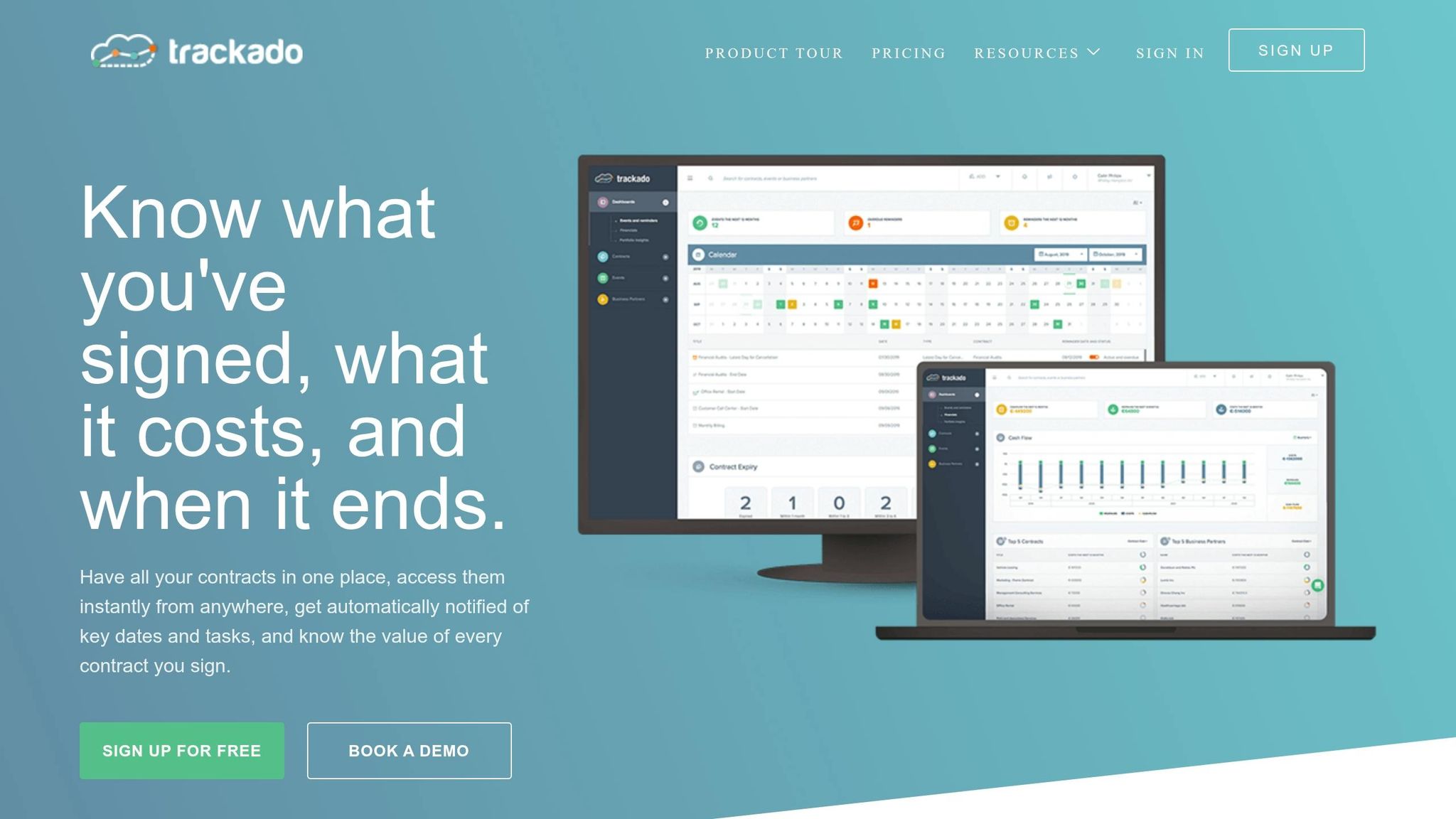
Once your repository’s structure and access controls are in place, Trackado can simplify centralized contract management. The platform allows contracts to be organized by partner, category, or department using customizable metadata fields. Whether it’s a franchise agreement’s notice period or a PMS vendor’s SLA response time, Trackado’s assistive AI can extract key metadata from uploaded documents, cutting down on manual data entry during migration.
For hotel groups managing multiple properties, Trackado offers property-level separation, keeping each location’s contracts organized while ensuring corporate teams can view everything with the appropriate permissions. For example, a global luxury hotel group with properties across multiple continents uses Trackado to manage contracts at the property level, with corporate teams maintaining oversight across the portfolio. The platform scales easily across portfolios and can be implemented quickly – teams can start using it within days rather than months.
Building a Version Control Process for Hotel Vendor Contracts
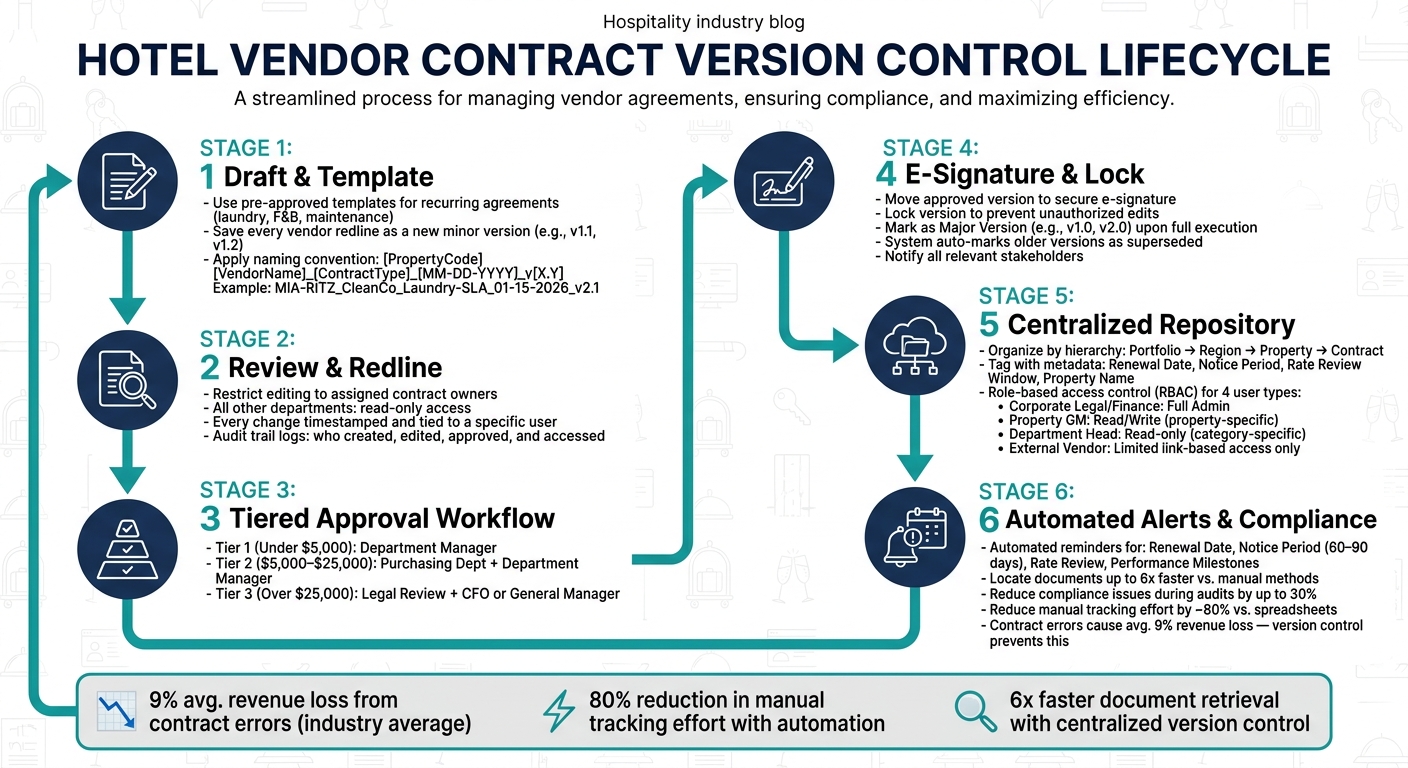
Hotel Vendor Contract Version Control Process: From Inventory to Compliance
Once you’ve organized your repository and defined roles, the next step is crafting a process to ensure contract versions remain accurate and traceable across all hotel properties.
Standardizing Naming and Versioning Conventions
A clear naming convention is a simple but effective way to avoid version mix-ups. This structure helps eliminate confusion and ensures files are easy to identify. Pair the naming system with metadata tags like Vendor Type, Contract Category, Property Name, and Expiration Date to make searching effortless. Here’s a recommended format:
[PropertyCode]_[VendorName]_[ContractType]_[MM-DD-YYYY]_v[X.Y]
For example: MIA-RITZ_CleanCo_Laundry-SLA_01-15-2026_v2.1
- Major versions (e.g., v1.0, v2.0): Use these for fully executed agreements or major renegotiations.
- Minor versions (e.g., v1.1, v1.2): Reserve these for amendments, addenda, or internal redlines.
Apply this system consistently at all stages of the contract lifecycle to maintain clarity.
Managing the Contract Lifecycle with Version Control
Version control should be a constant throughout the contract lifecycle – spanning drafting, review, approval, signature, and renewal or termination. Each stage should generate a distinct version to ensure there’s no confusion about what was agreed upon and when.
The drafting phase is often where version chaos begins. To minimize this, use pre-approved templates for recurring agreements, such as those for laundry services, food and beverage suppliers, or maintenance vendors. These templates cut down on unnecessary back-and-forth and ensure consistent legal language across properties. During negotiations, save every vendor redline as a new minor version to prevent overwriting prior changes.
"Contracts used to sit on a shared server, in binders, or locally at each hotel. There was no standard procedure, and that could cost us through overlaps or missed termination dates." – Kinga Gawron, Legal Advisor & Contract Manager, Comwell Hotels
This lack of standardization poses serious risks. Comwell Hotels, a Danish hotel chain, faced this issue and centralized over 1,500 contracts, including 720 supplier agreements. This move gave them full visibility into notice periods and renegotiation windows across properties, which directly improved their negotiating leverage.
Adding Approval Workflows and E-Signatures
Approval workflows aligned with contract value and risk levels add an extra layer of governance. Here’s a sample structure for approvals:
| Approval Tier | Contract Value | Required Approvers |
|---|---|---|
| Tier 1 | Under $5,000 | Department Manager |
| Tier 2 | $5,000–$25,000 | Purchasing Department + Department Manager |
| Tier 3 | Over $25,000 | Legal Review + CFO or General Manager |
Once a version clears its designated approval tier, move it to e-signature as part of your contract automation checklist. Use secure, link-based e-signature tools to streamline the process. At this point, lock the version to prevent unauthorized edits that could bypass the review process.
Platforms like Trackado simplify this workflow by combining approval processes, e-signatures, and version tracking. Every version, comment, and signature is timestamped, creating a comprehensive audit trail. This is especially helpful during brand standard reviews or insurance audits, as it ensures you can quickly provide the correct executed version. By implementing these steps, hotels can avoid missed deadlines, compliance issues, and disputes over contract terms, making operations smoother and more reliable.
Using Version Control to Track Renewals and Stay Compliant
Automating Renewal and Obligation Tracking
Once your approval workflows and e-signatures are sorted, the next hurdle is ensuring that no critical deadlines are missed after a contract is signed. For hotels juggling numerous vendor agreements, manual tracking quickly becomes unmanageable.
The solution? Tagging contracts with essential metadata like Renewal Date, Notice Period, Rate Review Window, and Property Name. This allows your system to automatically send reminders for important deadlines. This is especially useful for contracts with auto-renewal clauses – missing a 60- or 90-day termination window could lock you into another year under unfavorable terms.
Tools like Trackado make this process seamless by offering automated deadline alerts and customizable fields for key dates, whether it’s a renewal, rate review, or performance milestone. For hotel groups managing multiple properties, automation significantly reduces the manual effort required to track contracts compared to spreadsheet-based methods, freeing up time for higher-value procurement and compliance work. This not only saves time but also strengthens compliance and reporting processes.
Staying Compliant with Brand Standards and Audits
Automated alerts aren’t just about deadlines – they also help ensure compliance with brand standards, keeping every property audit-ready. Version control plays a critical role here. When an auditor requests the signed version of a vendor agreement – be it for laundry services or food safety – you need to retrieve the correct document immediately.
A timestamped audit trail, showing every edit and approval, can resolve vendor disputes by pointing directly to the signed and approved version. Hotels using centralized, version-controlled systems can locate documents up to six times faster than those relying on manual methods. Additionally, when properties use pre-approved templates, deviations from brand standards are easier to spot, reducing compliance issues during audits by as much as 30%.
Using Contract Data for Multi-Property Reporting
Contract data doesn’t just help with deadlines and compliance – it’s also a powerful tool for strategic reporting across multiple properties. Version-controlled contracts make it easier to aggregate and analyze data. By tagging contracts with consistent metadata – like property name, vendor category, contract value, and expiration date – you can create dashboards that highlight renewal compliance rates, total vendor spend, and upcoming renegotiation opportunities.
Take Comwell Hotels as an example. They centralized over 1,500 contracts, including 720 supplier agreements, into a single system. This gave them a clear, data-driven view of termination and renegotiation dates across their entire chain.
"Complete Control now shows us exactly when contracts must be renegotiated, renewed, or terminated. It links the individual hotels with central management, making it easier to keep a consistent, efficient standard." – Kinga Gawron, Legal Advisor & Contract Manager, Comwell Hotels
This kind of visibility turns contract data into a negotiation advantage. For instance, if several properties are renewing contracts with the same vendor category in the same quarter, you can consolidate those agreements and negotiate from a stronger position. That’s a level of leverage that’s nearly impossible to achieve when contracts are scattered across local servers or physical binders.
Governance, Training, and Process Improvement
Setting Up a Governance Structure for Version Control
For version control to work effectively, you need clear ownership. Start by assigning a central Legal & Compliance team to manage all contracts across properties. This team sets the rules for creating new versions, approving changes, and escalating issues when necessary.
A tiered approval structure can help speed up reviews while ensuring proper oversight:
| Approval Tier | Contract Value | Required Approvers |
|---|---|---|
| Low | Under $5,000 | Department Manager |
| Medium | $5,000 – $25,000 | Department Manager + Purchasing Review |
| High | Over $25,000 / High Risk | Legal Review + CFO or General Manager |
Combine this structure with role-based access control (RBAC), ensuring team members only handle contracts relevant to their roles. Automated audit trails can capture every edit and approval, providing a reliable record of activity. Schedule quarterly reviews of these logs to ensure adherence to policies. This approach minimizes compliance risks and simplifies contract renewals across properties.
For example, Comwell Hotels centralized over 1,500 contracts into a streamlined process by establishing a Legal & Compliance team led by Julie Marie Baggesen and Kinga Gawron. This shift transformed scattered contract management into a cohesive system.
Once governance is in place, focus on equipping your team with the right training.
Training Hotel Staff on Version Control
Training should be tailored to each team member’s role, ensuring they understand their specific responsibilities:
| User Group | Training Focus |
|---|---|
| Procurement | Vendor SLAs, automated data capture, approval routing |
| Finance | Version control for fee structures and payment terms |
| HR Staff | Secure folder management, certificate and permit tracking |
| Hotel Managers | Role-based dashboards, local vendor oversight, service dates |
The aim is to make version control part of daily routines, not an extra administrative task. Many platform providers offer onboarding support and custom training sessions aligned with your team’s workflows. Julie Rodgers, VP of Accounting at Quorum Hotel Advisors, shared how this approach delivered unexpected benefits:
"What started out as a means to control hotel contracts and renewals became an initiative for cost-savings. GM’s increased their contract reviews and…found alternative vendors that has lead to cost savings."
Training on mobile access can also speed up approval cycles, reducing delays from days to mere hours.
Once training is in place, the next priority is refining these processes over time.
Improving Version Control Processes Over Time
To stay effective, version control processes need regular updates. Vendor relationships and brand standards evolve, and your system should adapt accordingly. Conduct biannual reviews of version control practices, using audit trail data to pinpoint delays or recurring issues. Are approvals getting stuck at a certain stage? Are some properties consistently missing renewal deadlines?
Maintaining this level of discipline ensures contract integrity across all properties. It also helps shift contract management from reactive to proactive. Instead of just monitoring issues, you can use contract data to anticipate and address potential problems. For instance, AI tools can flag deviations from standard contract terms, while standardized templates can cut legal review times by up to 60%. The more your team adheres to established processes, the more reliable your reporting becomes – strengthening your position in vendor negotiations.
Conclusion: What Structured Version Control Delivers for Hotels
Unstructured vendor contracts can lead to serious issues for hotels, including revenue loss and compliance risks. In fact, contract errors account for an average 9% revenue loss in the industry. By adopting centralized contract management with clear ownership, automated alerts, and audit trails, hotels can significantly reduce missed deadlines and compliance mistakes. This approach not only minimizes risks but also simplifies audits and contract renewals.
With structured systems in place, hotels can avoid unexpected auto-renewals, track compliance certifications effortlessly, and maintain consistent brand standards across all properties. Audit-ready documentation becomes accessible in seconds. This method creates a reliable, centralized source of truth for every property in a hotel group.
The long-term benefits are clear: better accountability leads to substantial operational savings.
Shifting from outdated systems to a unified, automated process is essential for improving operational efficiency. Tools like Trackado provide the features needed for this transformation. With a centralized repository, automated alerts, and streamlined approval workflows, platforms like Trackado replace scattered binders and shared drives with a single, reliable source of truth.
This isn’t just about better documentation. It’s about turning contract management into a strategic asset – an asset that reduces risks, uncovers cost-saving opportunities, and ensures every property operates with the most current and approved information.
FAQs
What’s the quickest way to inventory all vendor contracts across properties?
The quickest way to manage vendor contracts across multiple properties is by consolidating them into a single, searchable digital system. Using a contract management platform, you can categorize agreements by partner, department, or type, giving you a clear, organized overview. These platforms often include automated tools to pull key details like obligations, expiration dates, and renewal terms, saving you from the chaos of digging through scattered files or email threads.
How should a hotel handle vendor redlines without losing the audit trail?
Managing vendor redlines effectively requires avoiding manual methods like email threads or spreadsheets, as these can lead to version mix-ups. Instead, opt for a centralized contract management system that automatically timestamps and logs every change. Tools such as Trackado streamline the process by tracking edits, providing a clear negotiation history, and ensuring only the most recent, approved version is shared. This approach promotes accountability and makes audits much easier.
Which contract dates should trigger automated renewal alerts?
Set up automated renewal alerts based on lead times that provide enough room for renegotiation or rebidding. For standard vendor contracts, a 90-day window is often recommended, while insurance renewals typically benefit from 45–60 days. Tools like Trackado can simplify this process by centralizing contracts and sending timely reminders. These notifications help you avoid missed deadlines or being locked into unfavorable auto-renewals. Make sure the alerts are tailored to each contract’s specific notice period to allow ample time for evaluation and decision-making.