Material recovery clauses in contracts aim to reduce waste and promote material reuse. However, managing these clauses can be challenging due to scattered data, manual processes, and complex regulations. AI tools simplify this by automating clause identification, tracking key milestones, and centralizing contract storage. Platforms like Trackado offer features such as automated data extraction, cloud-based storage, and real-time compliance tracking, helping organizations streamline processes and meet recovery obligations effectively.
Key Takeaways:
- Challenges: Managing clauses manually leads to inefficiencies and errors.
- AI Solutions: Automates clause management, tracks deadlines, and centralizes data storage.
- Benefits: Saves time, reduces errors, improves compliance, and enhances oversight.
AI tools are transforming how businesses handle material recovery clauses, making the process more efficient and accurate.
Problems with Managing Material Recovery Clauses
For many U.S. organizations, traditional methods of managing material recovery clauses fall short. Relying on scattered storage systems and manual processes often creates inefficiencies, making precise clause tracking a daunting task. Below, we explore how these challenges disrupt effective management.
Scattered Data and Fragmented Storage
Material recovery clauses are often buried in a maze of emails, shared drives, physical files, and departmental folders. This lack of centralized storage makes locating specific clauses an uphill battle. The result? Duplicate agreements, outdated versions, and missed critical deadlines due to inconsistent record-keeping.
Kieran Lynch, Head of Legal and Compliance at Rakuten Europe, shared his experience with this issue:
"Without Trackado, we often found it difficult to find a specific contract that we knew we had, but it was hard to locate due to our various storage methods."
Manual Processes and Error Risk
Tracking contracts manually – often through spreadsheets – introduces avoidable errors and delays. This not only increases the risk of missed deadlines but also hampers accurate reporting.
Peter Skeen, Head of Legal, Procurement and Company Secretarial at Good Energy, described the frustration of relying on manual tools:
"Before using Trackado, managing contracts without a proper solution was frustrating and inconsistent. We used a spreadsheet, which made it difficult to gain any insights or analysis from the data."
Without a centralized system, legal teams often struggle to maintain oversight of important contract dates. This makes it challenging to meet deadlines and produce accurate compliance reports on time. These obstacles highlight the need for a streamlined, automated solution to simplify and improve contract management.
AI-Powered Solutions for Managing Material Recovery Clauses
AI tools tackle challenges like scattered data and manual errors, simplifying the compliance process for material recovery clauses. Modern contract management systems, powered by AI, replace chaotic manual workflows with automated processes that minimize mistakes and enhance compliance oversight.
Automated Data Extraction and Clause Identification
Gone are the days of manually combing through contracts to locate material recovery clauses. With AI, machine learning algorithms can scan entire contract libraries in no time, identifying clause types and pulling out key terms with precision.
These systems are smart enough to recognize various clause formats, even when different legal language or structures are used. They automatically flag critical details like recovery thresholds, notification periods, and enforcement deadlines. This is a game-changer for organizations managing hundreds – or even thousands – of contracts across departments.
By turning unstructured contract text into structured, analyzable data, these tools make it easier to spot trends, assess risks, and maintain consistent enforcement. Legal teams no longer need to spend hours poring over lengthy agreements to find essential provisions. Instead, automated processes enable centralized, customizable contract management systems that save time and reduce errors.
Centralized Contract Storage
AI-driven solutions also address the issue of fragmented contract storage. With cloud-based repositories, organizations can store all material recovery clauses in one place, eliminating the hassle of scattered files and folders.
Advanced search features let users locate contracts or clauses using natural language. You can search by contract type, party names, clause categories, or even specific terms within recovery provisions. This functionality drastically cuts down the time spent searching for relevant documents.
To maintain security, access controls ensure that only authorized personnel can view or edit certain information. This centralized system not only boosts collaboration among legal, procurement, and finance teams but also speeds up decision-making by giving everyone access to the same up-to-date information.
Customizable Tracking and Compliance Features
Manual tracking errors are a thing of the past with AI platforms offering tailored monitoring tools. These systems allow teams to create customizable fields for tracking data points specific to their material recovery clauses, such as recovery amounts, trigger events, or regulatory obligations.
Automated reminders ensure stakeholders are notified well before deadlines. These alerts can escalate across teams, preventing missed recovery opportunities. Plus, you can adjust the timing and frequency of reminders to align with each clause’s unique requirements.
Task-based approval workflows further streamline the recovery process. When a recovery event is triggered, the system automatically routes tasks to the right team members, guiding them through every step – from initial assessment to final resolution.
Real-time dashboards provide a clear view of recovery clause performance across the entire contract portfolio. Legal teams can quickly identify trends, measure success rates, and generate compliance reports for stakeholders. This data-driven approach supports continuous improvement in managing and enforcing recovery clauses effectively.
Trackado: Simplifying Material Recovery Clause Management
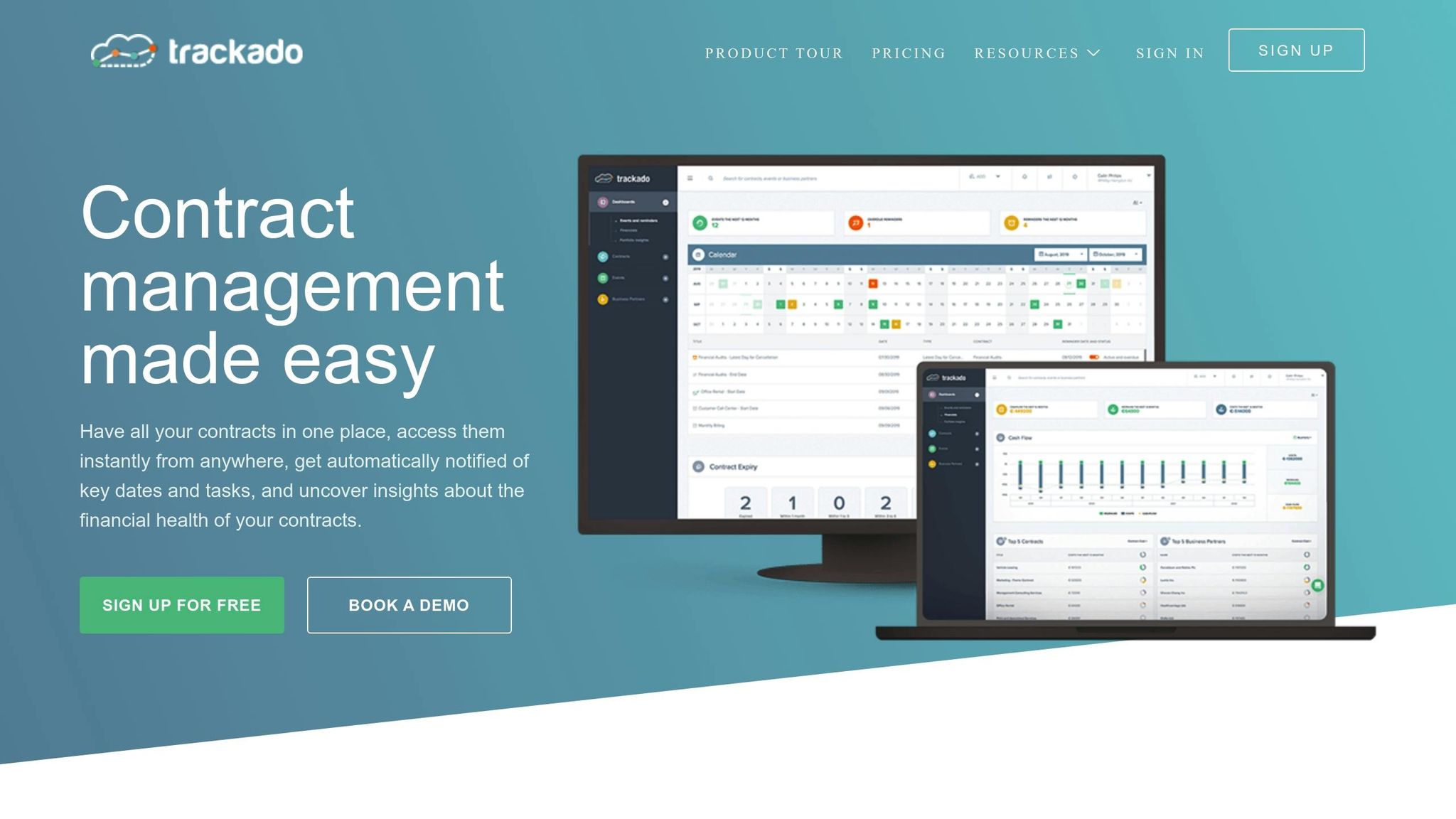
Trackado makes managing material recovery clauses easier for small and medium-sized businesses (SMBs) by combining intelligent automation with a straightforward interface. It leverages advanced AI tools to tackle the specific hurdles that come with tracking and managing recovery clauses.
AI-Powered Contract Management Features
Trackado uses AI-driven data extraction to simplify the identification of material recovery clauses within your contracts. It scans documents – no matter the format – and pulls out key details like recovery thresholds and deadlines. Once identified, these clauses are turned into actionable tasks, with milestones and reminders displayed on dashboards. These dashboards provide a clear view of deadlines, overdue tasks, and completed items.
The platform also introduces task-based workflows, automatically assigning responsibilities and routing approvals to the right people. This ensures accountability while its built-in financial insights give teams a better understanding of critical contract metrics. By addressing common pain points like manual tracking and scattered data, Trackado demonstrates how AI can make compliance with material recovery clauses much more manageable.
Customizable Fields and Automated Reminders
Trackado allows teams to create custom fields to capture specific details for each material recovery clause, ensuring nothing important slips through the cracks. Automated reminders help users stay on top of deadlines, sending notifications ahead of key dates based on user-defined intervals.
To make the process even smoother, Trackado includes integrated e-signing, which simplifies document execution while maintaining a secure audit trail. These features work seamlessly with its secure storage, forming a complete and efficient management system.
Secure and Centralized Storage
When dealing with sensitive contract data, security is non-negotiable. Trackado stores all information in secure European data centers, using enterprise-grade SSL encryption and strict access controls to ensure data safety. Its centralized repository eliminates the hassle of scattered storage, allowing users to quickly find specific clauses using natural language searches, contract categories, or partner names.
Advanced search and filtering options make it easy to organize and analyze contracts by department, partner, or custom tags. For added flexibility, users can export data in formats like Excel or PDF, and API access ensures smooth integration with other business tools.
sbb-itb-49df6ae
Best Practices for Using AI Tools in Material Recovery Clause Management
To get the most out of AI tools in material recovery clause management, focus on standardizing clause language, automating key milestones, and conducting regular audits. These strategies enhance both accuracy and compliance, ensuring your processes run smoothly and deliver consistent results.
Standardizing Clause Language for AI Recognition
Using standardized clause templates is a game-changer for improving AI recognition. By sticking to consistent terminology – like opting for "material breach" instead of multiple variations – you make it easier for AI tools to extract and process information accurately, while also reducing drafting errors.
Consistency is especially important for critical elements such as recovery thresholds, deadlines, and notification requirements. When these terms are uniform, AI tools can quickly identify and extract the relevant details without confusion.
Collaborate with your legal team to create a clause library that includes pre-approved language for various material recovery scenarios. This library not only improves AI accuracy but also speeds up contract drafting and minimizes the risk of missing key provisions.
Additionally, provide your AI tools with clear guidelines, including your organization’s playbooks, governing laws, and fallback positions. The more context you supply, the better the AI performs when analyzing and managing material recovery clauses.
Once standardized language is in place, the next step is to ensure timely execution through automated milestone tracking.
Setting Up Automated Milestone Tracking
Pinpoint critical milestones in your material recovery process and configure the AI system to send automated, risk-based reminders. Use task-based workflows to assign responsibility for actions tied to these milestones.
Key milestones often include breach notification deadlines, cure periods, escalation points, and final recovery action dates. Automating reminders for these deadlines ensures your team has enough time to respond effectively.
Instead of a blanket approach, consider risk-based scheduling. For example, high-value contracts or those with complex recovery terms may require more frequent reminders, while simpler agreements might need only basic advance notices. Configure your AI system to adjust reminder frequency based on factors like contract value, the importance of the relationship, and historical performance data.
Ensure your AI system provides clear, explainable recommendations with tracked changes and justifications for its suggestions. This transparency makes it easier for your team to understand flagged milestones and take the necessary follow-up actions.
These automated workflows pave the way for effective compliance reviews and audits.
Conducting Regular Audits and Compliance Reviews
Regular audits are essential to verify AI accuracy and ensure tasks are being completed on time. For high-risk contracts, consider conducting audits more frequently than the standard annual review. Tailor the frequency and scope of these reviews to match your organization’s risk profile and compliance requirements.
Focus your audits on risk-based priorities instead of reviewing all contracts equally. For instance, prioritize contracts with higher dollar values, longer durations, critical vendor relationships, or those tied to heavily regulated industries. Factors like past vendor performance, strategic business importance, and recent regulatory changes should guide your audit plan.
During audits, confirm that the AI tool is correctly identifying and extracting clause information. Check whether automated reminders are being triggered appropriately and if assigned tasks are completed on schedule. Look for patterns in missed deadlines or compliance gaps that may signal configuration issues or training needs.
Human oversight is crucial in this process. While modern AI systems can handle complex reviews, they must operate under documented human supervision to meet governance expectations.
"Human oversight is non-negotiable. Modern ‘agentic’ systems can run multi-step reviews, but they must operate under documented human supervision. This is good practice and, in some cases, an emerging expectation under governance frameworks."
- Gabby Macsweeney, LEGALFLY
When evaluating AI tools, prioritize features like audit trail functionality, traceability for sources and reasoning, and clear data-use policies to protect sensitive information. These features make compliance reviews more thorough and help demonstrate your organization’s due diligence to regulators or auditors.
Finally, document your audit findings and develop action plans to address any gaps or areas for improvement. This ongoing cycle of review and refinement strengthens your material recovery clause management processes while building a strong compliance record over time.
Conclusion: Simplifying Material Recovery Clause Management with AI
Handling material recovery clauses doesn’t have to be a cumbersome process anymore. Thanks to AI-driven contract management tools, what was once a manual and error-prone task has become an automated and dependable system.
Centralized, intelligent contract management offers organizations immediate advantages. AI tools enable risk-based milestone tracking and provide timely reminders before crucial deadlines. This level of automation not only reduces the chance of mistakes but also ensures compliance is met on time.
Take Trackado, for example. This platform integrates AI-powered data extraction with customizable fields and automated workflows tailored specifically for contract management. Its task-based approval workflows assign material recovery milestones to the right team members, while automated reminders ensure deadlines are never missed. Additionally, Trackado organizes contracts efficiently, making them easily accessible during compliance reviews or recovery actions. This kind of streamlined management directly addresses the challenges and solutions discussed earlier.
Moreover, platforms like Trackado prioritize security, offering enterprise-grade SSL encryption and hosting in secure European data centers – providing peace of mind for SMBs.
Key strategies such as standardized language, milestone tracking, and regular audits are essential for success. By adopting AI tools alongside these best practices – like automated workflows and human oversight – your organization can transform compliance into a competitive advantage.
Investing in AI-powered contract management pays off in multiple ways: saving time, reducing legal risks, strengthening vendor relationships, and improving financial outcomes. As regulations grow more complex and contracts become increasingly intricate, these intelligent systems provide the foundation for long-term success in managing material recovery clauses.
FAQs
How can AI tools make managing material recovery clauses easier and more effective?
AI tools make handling material recovery clauses much easier by automating essential tasks, cutting down on manual effort, and reducing the chances of mistakes. They can track contractual obligations in real time, send reminders for critical deadlines, and flag potential compliance issues quickly.
By simplifying these processes, AI-driven solutions save time and improve precision, helping businesses stay aligned with their commitments and avoid expensive errors. These tools are an effective way to manage the complexities of contract terms like material recovery clauses.
How does Trackado help simplify the management of material recovery clauses?
Trackado simplifies handling material recovery clauses by using AI-driven data extraction to quickly pinpoint crucial terms and obligations. It also offers tools like customizable fields and milestone tracking, making it easy to adapt workflows and keep track of important deadlines.
The platform goes a step further with automated reminders and built-in e-signing, helping you stay on top of approvals and actions. Task-based workflows make team collaboration straightforward. With Trackado, organizations can bring all contract management under one roof and maintain compliance effortlessly.
How can AI tools be used effectively to manage material recovery clauses?
To make the most of AI tools for managing material recovery clauses, begin by establishing specific objectives. For example, you might aim to automate the identification of clauses or keep better track of compliance. The quality of the data you provide is crucial – accurate and well-structured input will significantly improve the tool’s effectiveness.
Work closely with your team to incorporate AI into your contract management processes. It’s also important to routinely review the tool’s results to ensure they remain accurate and reliable. By taking these steps, you can simplify compliance management, stay on top of obligations, and adjust to evolving contractual demands with ease.