Want to save money on vendor contracts? Start with better contract management**.**
Using outdated methods like spreadsheets and emails to manage contracts can cost you thousands of dollars per agreement. Modern contract management tools centralize data, automate workflows, and provide visibility into terms and renewal dates, helping businesses save time and reduce costs.
Here’s the bottom line:
- Save 8–12% on vendor costs within months with AI-powered tools.
- Centralizing contracts prevents missed deadlines, duplicate agreements, and uncontrolled spending.
- Automated reminders and workflows help avoid costly auto-renewals and late payment penalties.
- Spend analysis and milestone tracking uncover savings opportunities and ensure vendors deliver as promised.
Switching to automated contract management not only reduces errors but also improves vendor oversight, negotiation power, and overall efficiency.
Finding Cost-Saving Opportunities in Vendor Contracts
To cut vendor costs effectively, you first need to understand exactly what you’re paying for and when. Many organizations face challenges with visibility, especially when contracts are scattered across departments and systems. This lack of organization makes it tough to spot redundancies, track spending habits, or identify opportunities to negotiate better terms.
The solution? Centralizing your contracts to gain a clear, big-picture view. When doing so, following digital contract storage best practices ensures your data remains secure and compliant.
Centralizing Contracts for Better Oversight
A centralized contract repository can completely change the way you manage vendors. Instead of wasting time searching through scattered files, you get instant access to all agreements. This streamlined approach uncovers spending patterns and contract details that were once buried in departmental silos.
Peter Skeen, Head of Legal, Procurement, and Company Secretarial at Good Energy, highlights the impact of this shift:
"Before using Trackado, managing contracts without a proper solution was frustrating and inconsistent. We used a spreadsheet, which made it difficult to gain any insights or analysis from the data. There was also little central legal team oversight of key contract dates. With Trackado, we were able to analyze and draw insights from our contract library, seeing common types of contracts and being able to draw efficiencies from this."[1]
Centralizing contracts also brings financial clarity. With all billing details in one place, you can easily spot unusual charges, confirm that negotiated discounts are applied, and identify contracts that no longer serve their purpose. Plus, automated alerts for upcoming expirations or auto-renewals give you time to decide whether to renegotiate, renew, or switch vendors.
Identifying Redundancies and Consolidating Contracts
Once your contracts are centralized, patterns and overlaps become much easier to spot. For instance, you might find that several departments are paying for similar IT services or that multiple teams have overlapping software licenses. These redundancies are low-hanging fruit for cost savings.
Organizing contracts by category can also lead to tailored savings. Research suggests that this method can reduce costs by 10-15% through better supplier relationships and smarter procurement decisions.
Here’s what to look for during your analysis:
- Contracts with outdated pricing that haven’t been reviewed in years.
- Vendors offering similar services at different rates.
- Unused features or premium add-ons that don’t provide value.
Consolidating suppliers can simplify operations, boost your negotiating power, and qualify your organization for volume discounts. However, it’s important to avoid putting all your eggs in one basket. Striking the right balance ensures you benefit from consolidation while minimizing risks tied to over-reliance on a single vendor.
Once you’ve identified redundancies, advanced AI tools can help refine these insights even further.
Leveraging AI for Smarter Contract Management
Manually reviewing contracts is not only time-consuming but also prone to errors. AI-powered tools can transform static documents into actionable insights by automatically scanning for key terms, pricing structures, renewal dates, and obligations.
For example, Trackado’s AI features can flag issues like auto-renewals, non-competitive pricing, and unfavorable terms that might otherwise go unnoticed. In fact, organizations using AI in contract management have seen a 44% boost in productivity and a 39% reduction in contract lifecycle times.
AI also helps connect contract data with spending patterns, revealing areas where negotiated discounts aren’t being applied due to compliance issues or administrative mistakes. For instance, you might discover that a volume discount isn’t being utilized because purchases are spread across different departments.
Another key benefit of AI is its ability to detect maverick spending – unauthorized purchases made outside of agreed contracts. These rogue expenses often bypass negotiated rates and volume discounts, leading to higher costs. By identifying and curbing these instances, you can redirect spending to preferred vendors and maximize the savings you’ve already secured.
Organizations that adopt AI-driven contract analysis can achieve cumulative cost savings of 8-12% within just 3 to 12 months.
Reducing Vendor Expenses with Automated Contract Management
Managing contracts manually – using spreadsheets and emails – can lead to missed deadlines, unexpected expenses, and underperforming vendors. Automated contract management changes the game, cutting lifecycle times by 39% and increasing productivity by 44%. These improvements translate into real savings by reducing costly errors and improving oversight. Let’s explore how features like automated reminders, approval workflows, and milestone tracking can help trim vendor expenses.
Using Automated Reminders to Avoid Extra Costs
Missing a contract cancellation deadline can be a costly mistake. A mid-sized U.S. company experienced this firsthand when it failed to cancel a software subscription on time, resulting in an unplanned $12,000 renewal. After implementing automated reminders, the company began receiving timely alerts, allowing them to renegotiate or cancel contracts before renewal deadlines.
Automated reminders ensure you stay on top of critical contract dates. Instead of relying on someone to manually track expiration dates, the system sends alerts well in advance. This gives you enough time to evaluate whether a contract still serves your needs, negotiate better terms, or switch to a more affordable option.
Key issues automated reminders help prevent include:
- Missed cancellation windows, which can lead to unwanted auto-renewals.
- Late payment penalties, adding unnecessary fees to your budget.
- Compliance deadline violations, potentially resulting in fines or service interruptions.
By following a contract automation checklist and automating these reminders, organizations can avoid costly oversights and ensure they’re only working with vendors that align with their goals.
Setting Up Task-Based Approval Workflows
While reminders help you manage deadlines, task-based approval workflows ensure every expense aligns with your budget. Without proper controls, unauthorized spending can quickly inflate vendor costs. Approval workflows add a layer of accountability, requiring all vendor expenses to be reviewed before funds are committed.
For example, smaller contracts might only need departmental approval, while larger agreements could require additional sign-offs. This ensures spending decisions match your organization’s risk tolerance.
"Without Trackado, we often found it difficult to find a specific contract that we knew we had, but it was hard to locate due to our various storage methods. Furthermore, going through the different stages of business input, drafting, approvals, and signature was difficult without a formalized process and tool."
- Kieran Lynch, Head of Legal and Compliance at Rakuten Europe[1]
Effective approval workflows include:
- Defined roles to clarify who can approve specific contract types.
- Automated routing to send contracts to the right person without delays.
- Integrated e-signature tools for seamless digital approvals.
- Audit trails to track decisions for compliance and accountability.
This system prevents unauthorized spending and ensures that negotiated terms and budget limits are consistently followed.
Tracking Milestones for Payments and Deliverables
Paying vendors before they deliver results is risky. Milestone tracking aligns payments with deliverables, ensuring vendors meet their obligations before receiving funds. This prevents premature payments, avoids duplicates, and helps you steer clear of late fees.
Milestone tracking systems monitor:
- Payment due dates and amounts, avoiding late fees.
- Deliverable deadlines and acceptance criteria, ensuring vendors fulfill their commitments.
- Renewal, cancellation, and compliance deadlines, preventing auto-renewals and penalties.
- Performance review checkpoints, helping assess ongoing vendor value.
"With Trackado we finally have all data in one place and get automatically alerted about required renewals so that we can focus on building bikes."
- Oliver Römer, Managing Partner at tout terrain[1]
By documenting vendor performance, milestone tracking also gives you leverage. If a supplier misses a deliverable, you can use this information to request discounts or renegotiate terms. This proactive approach ensures small issues don’t escalate into expensive problems.
Companies using automated milestone tracking report 8-12% cost savings within 3 to 12 months, thanks to fewer errors, better compliance, and smarter vendor management. Trackado’s tools make this level of oversight accessible for small and medium businesses, offering centralized views of contract obligations and automated alerts to keep everything on track.
Using Financial Insights to Negotiate Better Vendor Agreements
Negotiating from a position of knowledge leads to stronger outcomes. By analyzing contract spending, vendor performance, and market benchmarks, you can transform negotiations into opportunities for cost optimization. Financial insights give you the tools to renegotiate contracts proactively, ensuring better value for your organization.
"Having all contract billing details in one place means it is easy to get full transparency over your contract financials." – Trackado website [1]
Organizations that regularly review their contract data often identify 10-15% cost savings through smarter negotiations and improved supplier relationships. With spend analysis, you can uncover gaps or inefficiencies, giving you a stronger foundation to negotiate from.
Using Spend Analysis to Find Negotiation Opportunities
Spend analysis uncovers trends and inefficiencies that might go unnoticed when contracts are scattered across various systems. By consolidating spend data from all departments and vendors, you can pinpoint areas ripe for improvement, such as opportunities for vendor consolidation, volume discounts, or eliminating unnecessary services.
Here are some common ways spend analysis can uncover savings:
- Vendor consolidation and underused services: If different departments are using multiple vendors for the same service, combining those contracts can lead to volume discounts. Analytics can also highlight mismatches between what you’re paying for and what you’re actually using – like unused software licenses.
- Pricing benchmarks: Comparing vendor rates to industry standards gives you tangible leverage when negotiating for better terms.
Performance data also plays a key role. For instance, if a vendor frequently delivers late or requires additional support, you can use this information to justify penalty clauses or negotiate lower rates in future agreements.
Many organizations now rely on AI-powered analytics to streamline this process. These tools can quickly identify insights and recommendations that would take weeks to uncover manually. With automated analysis, you can renegotiate contracts more frequently and with greater confidence, ensuring your strategy is always backed by solid data.
Comparing Active vs. Reactive Contract Negotiation
Building on the insights from spend analysis, it’s essential to evaluate how you approach vendor negotiations. Proactive negotiation – where contracts are reviewed well before renewal – offers significantly better outcomes compared to reactive approaches, which often leave organizations scrambling after issues arise or contracts auto-renew.
Here’s a comparison of the two approaches:
| Approach | Cost Impact | Risk Level | Administrative Effort |
|---|---|---|---|
| Active Negotiation | Maximizes savings through better terms and discounts | Lower risk due to proactive management | Higher upfront, but reduced long-term due to automation |
| Reactive Negotiation | Misses savings opportunities; risks unfavorable renewals | Higher risk from missed deadlines or compliance issues | Lower upfront, but higher long-term due to crisis management |
Proactive negotiation also allows for scenario modeling. With financial dashboards, you can visualize the impact of different contract terms, helping you prepare for negotiations with clear, data-backed strategies. This level of preparation consistently leads to better outcomes than scrambling to renegotiate at the last minute.
sbb-itb-49df6ae
How Trackado Simplifies Vendor Cost Management
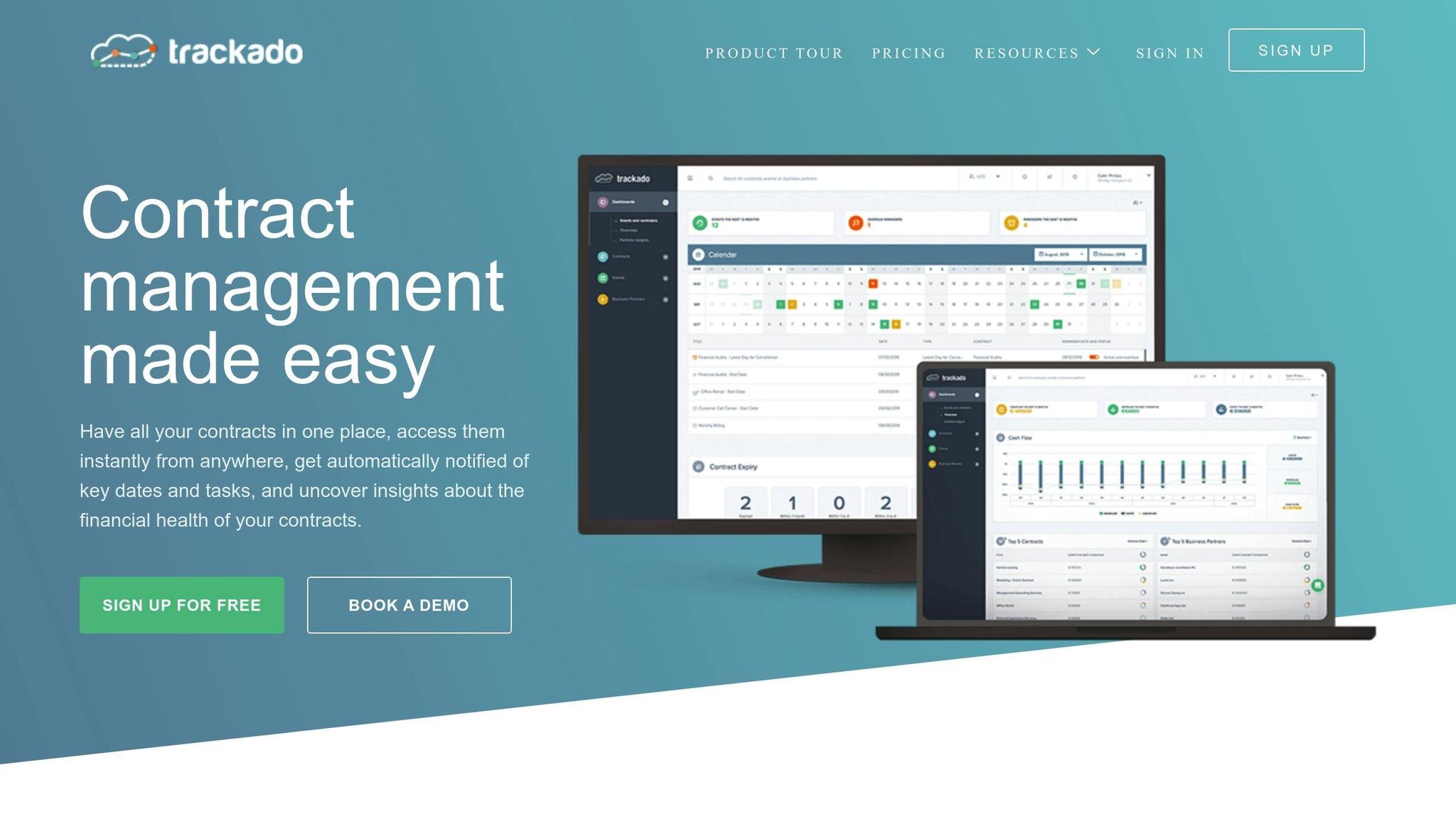
Trackado takes vendor cost management to the next level by offering features tailored specifically for U.S. small and medium-sized businesses (SMBs). It transforms the chaos of scattered contracts into actionable insights that help businesses save money. The platform tackles common challenges like lack of visibility, reliance on manual processes, and fragmented financial data, making it easier for SMBs to manage vendor expenses effectively.
Businesses using advanced contract lifecycle management tools, especially those powered by AI, have reported up to 15% reductions in procurement costs. Automated workflows can further deliver 8-12% cumulative savings within just a few months. Trackado brings these benefits to SMBs with an easy-to-use interface and powerful automation tools, offering a comprehensive approach to managing costs.
Centralized Storage and AI-Powered Insights
Trackado eliminates the mess of contracts spread across systems, spreadsheets, and filing cabinets by centralizing all vendor agreements in one secure location. This gives finance and procurement teams a clear view of their contracts, helping them identify overlapping services, redundant vendors, and upcoming renewals that could lead to unnecessary expenses.
The platform’s AI takes this a step further by automatically extracting critical details like financial terms, renewal dates, and obligations. This reduces the need for manual reviews and highlights opportunities for immediate savings. For example, procurement managers can quickly compare payment terms across contracts, spot less favorable agreements, and prioritize renegotiations to cut costs.
AI technology in contract management has proven to reduce contract lifecycle times by 39% and boost productivity by 44%. By automating tedious tasks, teams can focus on strategic cost-saving initiatives instead.
Automated Reminders and Custom Workflows
One of Trackado’s standout features is its automated reminder system. It ensures businesses never miss important dates like contract renewals, payment deadlines, or key milestones. Users can set reminders at 30, 60, or 90 days before a renewal, giving them plenty of time to assess performance and negotiate better terms while avoiding costly auto-renewals.
The platform also offers customizable approval workflows. This allows businesses to create tailored approval processes for different contract types. For instance, a company might require sign-offs from finance, legal, and department heads for any vendor contract exceeding $10,000. This reduces the risk of unauthorized spending and ensures all agreements are thoroughly reviewed before execution.
"The moment we knew we had made the right choice with Trackado was when we received email notifications that gave us a heads-up when something was ending or renewing. This really helped us to keep on top of things and avoid sticky situations with partners we didn’t want to continue to work with. I would strongly urge any record label or company whose core business is licensing to use this software. It’s absolutely crucial and can help you generate more revenue by approaching partners whose licenses are expiring specifically." – Yiannis Karavassilis, COO at CloudKid
Trackado also integrates e-signature functionality to speed up contract execution. This not only shortens turnaround times but ensures legally binding signatures, making it a perfect fit for remote work environments that many U.S. businesses rely on today.
Financial Dashboards and Security for SMBs
Trackado’s financial dashboards provide real-time insights into vendor spending, upcoming obligations, and cost trends. Businesses can filter expenses by vendor, category, or department, with all data displayed in U.S. dollar format for easy analysis. This makes it simple for finance teams to identify high-cost vendors, track savings from renegotiations, and set benchmarks for future procurement cycles. For example, a dashboard might reveal that the marketing department spends 30% more on software than other departments, prompting a review and potential consolidation of licenses.
The platform also maintains a complete audit trail of approvals, amendments, and renewals, making it easier to comply with U.S. regulations and handle audits.
When it comes to security, Trackado doesn’t cut corners. It uses enterprise-grade security measures like SSL encryption and strict access controls. While hosted in secure European data centers, it adheres to international data protection standards, ensuring safe handling of sensitive financial information for businesses with cross-border operations.
To further meet the needs of U.S. SMBs, Trackado offers extensive customization options. Companies can tailor contract fields, approval workflows, and notification settings to match their internal structures. For instance, they can require CFO approval for contracts over $5,000 or adjust reporting preferences to align with their unique business practices and compliance needs.
Conclusion: Reducing Vendor Costs with Better Contract Management
Managing contracts effectively can lead to major cost savings by bringing everything under one roof, automating processes, and leveraging data analytics.
When all vendor contracts are stored in a single, secure location, businesses gain the visibility needed to spot redundant services, overlapping agreements, and missed chances for consolidation. Without this centralization, contracts scattered across multiple systems often result in unnecessary spending – like paying for duplicate services – or missed renewal deadlines that could have been renegotiated for better terms.
Automation plays a key role in streamlining workflows and avoiding costly mistakes. By setting up automated reminders for renewals and enforcing approval processes, companies can save 20–50% of the time they currently spend on managing contracts. This efficiency allows teams to focus on broader cost-saving strategies.
Modern contract management platforms also deliver powerful financial insights. Procurement teams equipped with real-time data on vendor performance, payment terms, and spending trends can negotiate smarter and pinpoint areas for consolidation. These data-driven approaches have helped some organizations aim for cost savings of 30% or more in their contracting processes. Such insights directly enhance negotiation strategies and support broader cost-reduction goals.
For small and midsize businesses (SMBs), tools like Trackado offer enterprise-level features tailored to their needs. With robust security and user-friendly interfaces, these platforms bring advanced contract management within reach for smaller businesses, enabling them to achieve the same level of efficiency and control as larger enterprises.
In addition to immediate savings, this approach strengthens long-term supplier relationships, reduces compliance risks, and equips businesses to adapt quickly to market changes. As AI and automation continue to shape contract management, companies that adopt these technologies now will be better positioned to maintain a competitive edge and improve operational efficiency.
Start cutting vendor costs by centralizing, automating, and analyzing your contracts. This strategy lays the groundwork for ongoing savings and more strategic partnerships with your vendors.
FAQs
How does organizing all your contracts in one place help lower vendor costs?
Centralizing your contracts offers a transparent view of all vendor agreements, simplifying the process of spotting overlapping services, cutting unnecessary costs, or finding areas where renegotiation makes sense.
With everything stored in one place, you can easily monitor renewal dates, payment terms, and expense details, ensuring you stay on top of your spending. This organized method also helps you dodge late fees or unwanted automatic renewals that might drive up expenses.
How does AI improve contract management and help reduce vendor costs?
AI is transforming contract management by simplifying intricate tasks and revealing ways to save money. For instance, it can sift through contracts to extract and analyze key data, helping you pinpoint hidden costs, track renewal dates, and steer clear of missed deadlines that might result in extra expenses.
With tools like AI-driven data extraction, you can efficiently organize and oversee contracts, gain a clearer view of vendor spending, and make smarter financial choices. This automation not only cuts down on time spent but also boosts accuracy and streamlines the process of managing vendor agreements.
How can automated reminders and approval workflows help reduce vendor costs?
Automated reminders and approval workflows help keep you on top of crucial contract deadlines, like renewal dates and payment schedules. By staying ahead of these timelines, you can sidestep penalties, surprise fees, or unfavorable terms that might come from missed obligations.
These features also make the approval process smoother, cutting down on delays and speeding up decision-making. This not only reduces inefficiencies but also gives you greater control over vendor expenses while ensuring all contract terms are met.