Automating third-party compliance processes can save time, reduce errors, and improve oversight. Managing vendors manually – using spreadsheets and emails – often leads to missed deadlines, compliance risks, and inefficiencies. Automation centralizes vendor data, tracks risks in real-time, and sends alerts for key deadlines, ensuring smoother compliance workflows.
Key benefits include:
- Centralized storage: Securely organize contracts with advanced search and AI-powered data extraction.
- Risk monitoring: Automate third-party risk assessments using pre-set criteria and workflows.
- Deadline alerts: Avoid missed renewals or audits with timely notifications integrated into task systems.
For example, companies using automated systems report saving up to 20 hours per compliance cycle and achieving a three-year ROI of 526%. Tools like Trackado offer features like e-signatures, customizable workflows, and financial reporting to simplify compliance. By automating processes, businesses can focus on strategic goals while maintaining regulatory adherence.
Core Elements of Third-Party Compliance Automation
Building an efficient compliance system involves more than just ticking boxes. It requires a well-thought-out framework that combines centralized storage, continuous risk assessments, and proactive deadline management. These three core elements work together to address the challenges of managing vendor relationships and meeting contract compliance and regulatory requirements, all while reducing manual effort and errors.
Centralized Contract Storage
Imagine trying to manage dozens – or even hundreds – of contracts scattered across different platforms or departments. It’s a recipe for delays and confusion, especially during audits. That’s why the first step in compliance automation is consolidating all third-party agreements into a single, secure, and easily accessible location.
A centralized storage system does more than just organize documents. It provides secure access, advanced search capabilities, version tracking, and seamless integration with other tools. This setup ensures authorized team members can quickly locate contracts, track changes, and maintain a complete audit trail.
Take Kieran Lynch, Head of Legal and Compliance at Rakuten Europe, for example. Facing high audit demands as part of a listed company, Lynch used a centralized system to swiftly generate a comprehensive list of new contract partners for the year. What could have been a time-consuming process was handled with ease.
Modern platforms take this a step further by using AI to automatically extract data and categorize contracts by partner, department, or category. This eliminates the need for manual data entry, reduces errors, and gives teams instant visibility into costs, revenues, and important deadlines.
Once contracts are organized, the next priority is keeping an eye on risks.
Automated Vendor Risk Reviews
Relying on manual, periodic reviews to monitor vendor risks is like trying to steer a ship by looking in the rearview mirror. Risks can emerge at any time, and automation provides the tools to spot them in real time.
Automated systems apply consistent, pre-set risk criteria to all vendors, ensuring a uniform approach that manual assessments often lack. These systems can map regulatory requirements to specific risk metrics, use customizable algorithms for assessments, and trigger workflows to address risks as soon as they’re identified. This means issues are caught early and handled promptly.
Peter Skeen, Head of Legal, Procurement and Company Secretarial at Good Energy, shared how automation transformed his team’s operations. Before adopting an automated system, they struggled to extract insights from scattered contract data and missed critical dates. With automation, they gained a clear overview of their entire contract library, identified common contract types, and improved operational efficiency.
But identifying risks is only part of the equation. Keeping track of deadlines ensures nothing slips through the cracks.
Compliance Alerts and Deadline Tracking
Missed deadlines can lead to costly mistakes – automatic renewals, unintentional terminations, or even regulatory violations. Automated alerts and deadline tracking eliminate these risks by providing timely notifications for key compliance milestones, such as contract expirations, audits, or renewal deadlines.
An effective alert system doesn’t just send reminders. It integrates with task management platforms to ensure accountability. Notifications can be configured to reach multiple stakeholders, escalate as deadlines approach, and ensure that no critical dates are overlooked.
Yiannis Karavassilis, COO at CloudKid, described the frustration of managing contracts before implementing automated alerts:
"Before using Trackado, managing our contracts was frustrating. We had a structure in place to store our contracts, but we didn’t have a nice overview which also gave us timely notifications of when they were expiring. This caused deals to renew or end automatically without us having the right infrastructure to avoid this from happening."
After adopting automated notifications, CloudKid began receiving timely email alerts, which allowed them to avoid unwanted renewals and seize new opportunities by engaging partners before contracts expired. Similarly, Oliver Römer, Managing Partner at tout terrain, used automated alerts to manage patent renewals, freeing his team to focus on their core business:
"With Trackado we finally have all data in one place and get automatically alerted about required renewals so that we can focus on building bikes."
Choosing Tools for Compliance Automation
Once you’ve laid the groundwork, the next step is finding the right technology to drive your compliance automation. With a variety of solutions available, it’s important to choose a platform that meets your specific needs while offering strong functionality, security, and ease of use. Here are some key features to look for when automating compliance.
Key Features to Consider
Some essential capabilities to prioritize include AI-powered data extraction, customizable workflows, secure storage, integrated e-signatures, real-time contract data for financial reporting, and seamless integration with existing systems.
- AI-driven data extraction: This feature helps pull out critical contract terms and dates, minimizing errors and speeding up compliance reviews.
- Customizable workflows: Whether you’re a small business looking for simplicity or a larger organization needing advanced controls and audit trails, flexibility is essential to align with your regulatory and operational requirements.
- Secure storage: A well-organized and secure storage system simplifies audits and supports automated reminders for key dates and obligations, reducing the risk of missed deadlines or non-compliance.
- Integrated e-signatures: These make approvals faster while maintaining legal validity, especially useful for time-sensitive documents or when coordinating with remote stakeholders.
- Financial reporting: Clear insights into costs, revenues, and compliance-related obligations allow for better budgeting and help identify where compliance efforts provide the most value.
- Integration capabilities: A tool that works seamlessly with your current systems – like HR software, cloud storage, task tracking apps, and financial platforms – helps embed compliance into your daily operations.
How Trackado Supports Compliance
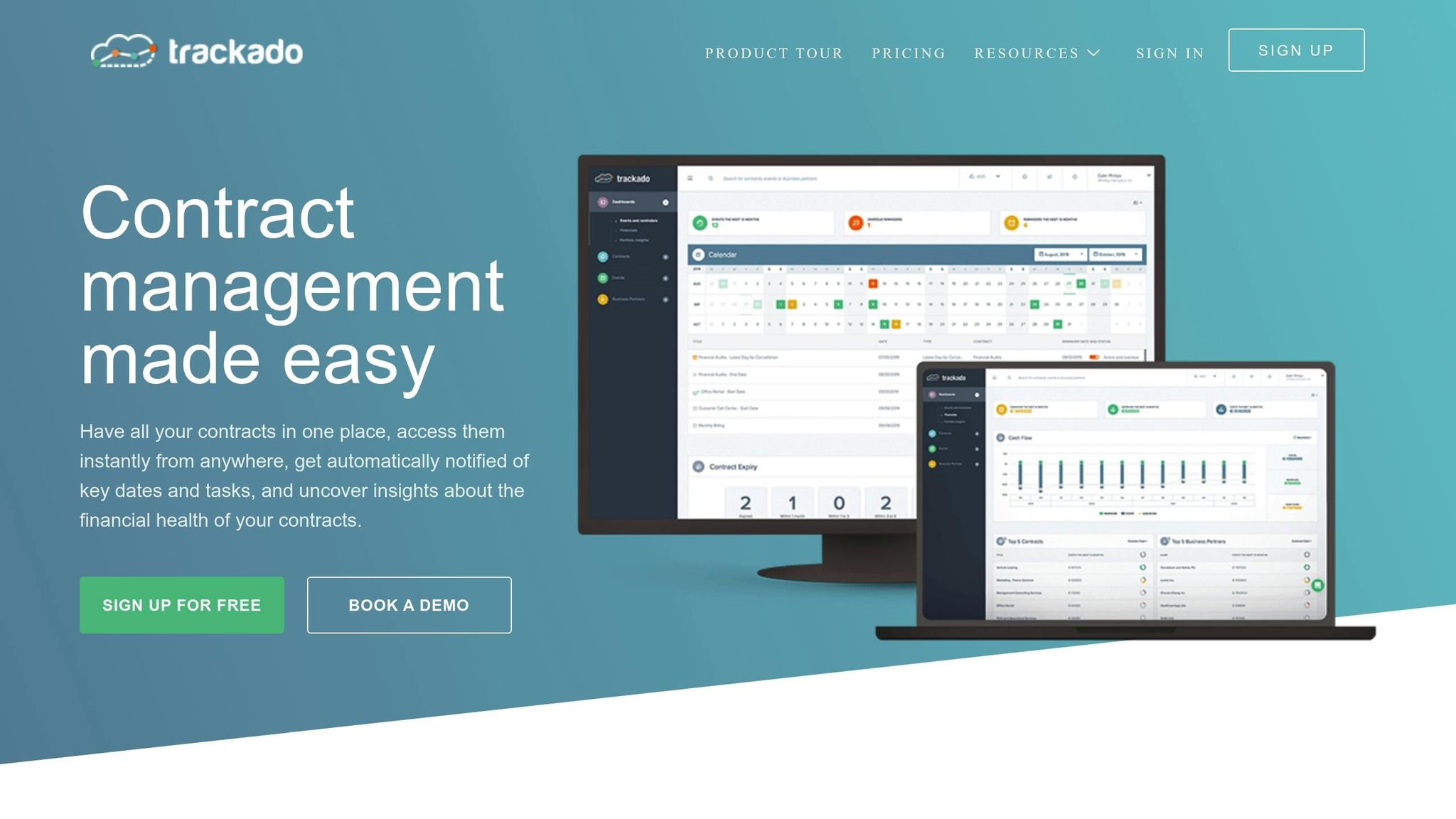
Trackado builds on these must-have features, offering a tailored solution that integrates smoothly into your compliance framework. Its comprehensive contract management system centralizes all third-party agreements, automates compliance processes, and makes critical data instantly accessible through AI-powered data extraction. This eliminates the need for manual entry by automatically identifying key contract terms, obligations, and deadlines.
The platform also features customizable fields and milestone tracking, allowing organizations to align Trackado with their specific regulatory requirements. Whether you’re navigating SOC 2, GDPR, or industry-specific standards, Trackado adapts to your needs rather than requiring you to adjust your processes.
With task-based approval workflows, compliance activities follow proper authorization channels while maintaining detailed audit trails. Integrated e-signing capabilities further streamline the process, covering the entire compliance lifecycle from initial agreements to final execution.
For U.S.-based organizations, Trackado supports standard formats like dollar currency ($), MM/DD/YYYY date formatting, and American English spelling, ensuring a smooth fit with your existing processes and reporting needs.
Security is another cornerstone of Trackado. Hosted in secure European data centers, it employs SSL encryption and TLS protection to keep sensitive contract and compliance data safe while remaining accessible to authorized team members via any web browser.
Alastair Gilchrist, Chief Technology Officer at NRLA, praised the platform’s scalability:
"The gradual pricing model worked well for us, since it was easy to scale. We started with the free plan, then moved to the Starter Plan, and eventually upgraded to the Business Plan as our needs grew. I recommend Trackado for its scalable value."
This flexible pricing structure makes Trackado an affordable option for businesses of all sizes – whether you’re just starting with basic compliance needs or managing complex regulatory frameworks at an enterprise level.
How to Implement Compliance Automation
Transitioning from manual compliance processes to automation starts with evaluating your current methods and then developing systems to address inefficiencies.
Review Your Current Processes
Begin by mapping out your existing compliance workflows to uncover bottlenecks, recurring errors, and inefficiencies. Collaborate with compliance, IT, and business teams to identify tasks that are repetitive, reporting processes that are slow, and access controls that may lack clarity. According to research, conducting a gap analysis – comparing your current workflows to industry standards and regulatory requirements – can help pinpoint areas for improvement.
Look for tasks that are ideal for automation by considering three key factors: risk level, cost impact, and audit frequency. For instance, manually tracking contract renewal dates across multiple vendors poses a high risk and occurs frequently, making it an excellent candidate for automation. Similarly, if compliance reporting takes 20 hours each quarter due to data collection from various spreadsheets, this is a clear inefficiency worth addressing.
Document these findings by aligning your processes with relevant regulatory standards to identify high-impact automation opportunities. Once you’ve mapped everything out, you can begin designing rule-based workflows to handle critical tasks automatically.
Set Up Automated Alerts and Workflows
Create workflows that trigger automated alerts for key compliance activities such as contract renewals, vendor reviews, regulatory reporting deadlines, and other milestones. This eliminates the need for manual calendar checks and reduces the risk of missed deadlines.
Automated workflows can also assign tasks, establish approval checkpoints, and monitor progress for compliance-related activities. For example, when a vendor contract is 90 days away from renewal, the system could automatically assign tasks to the procurement team to review terms, the legal team to assess compliance requirements, and the finance team to evaluate costs.
These workflows should align with your organization’s approval processes while maintaining detailed audit trails for regulatory purposes. Once these systems are in place, the next step is ensuring that your data security and access controls are equally robust.
Protect Data Security and Access
With workflows streamlined, securing your centralized data becomes critical. Implement strict role-based access controls to ensure only authorized personnel can view or modify compliance information. Centralizing sensitive data makes defining clear roles and permissions within your automation platform a top priority.
For example, finance team members might need access to contract values and payment terms, while legal staff would focus on compliance clauses and regulatory requirements. Regularly reviewing these permissions ensures that access remains appropriate as team members change roles or leave the organization.
Choose platforms that use encryption for both data storage and transmission, along with detailed audit logs to track all user actions. This helps with real-time monitoring of data access and can demonstrate compliance with data protection regulations during audits. As Trackado explains:
"Trackado keeps your data private and safe with TLS/SSL and file encryption, ensuring what is yours stays yours."
Additional safeguards like multi-factor authentication and secure document sharing can further protect sensitive information while allowing authorized team members to collaborate efficiently. The goal is to create a system that balances security and accessibility, supporting compliance without adding unnecessary hurdles to daily operations.
Finally, ensure your automated systems integrate seamlessly with your existing IT infrastructure, including cloud services, identity management tools, and task tracking applications. This integration embeds compliance into your daily workflows while maintaining consistent security standards across all platforms.
sbb-itb-49df6ae
Track and Improve Automation Results
Once you’ve implemented automation, it’s crucial to measure its effectiveness. This helps you assess ROI and identify areas for improvement. By analyzing efficiency gains and spotting recurring issues, you can create a smoother compliance process that meets your regulatory requirements. The data from automated systems offers valuable insights to guide decisions and improve workflows over time, ensuring your compliance efforts stay on track.
Important Metrics to Monitor
One clear sign of automation success is reduced manual work hours. Keep track of how much time your team used to spend on tasks like combing through spreadsheets, checking contract dates, or preparing audit documents. Compare those numbers with the time spent after automation to see the difference. Daisy Miller, Project Coordinator at Zapmap, shared that automation "has made contract admin so much easier!" and created a "much more streamlined and easier to navigate" experience.
Another key metric is fewer missed deadlines, which directly improves compliance and lowers risk. Automated alerts ensure your team gets timely reminders for contract renewals, regulatory deadlines, and other critical milestones, helping you avoid costly oversights.
Faster audit preparation times are another indicator of automation’s impact. Measure how long it takes to gather documentation, generate compliance reports, and respond to auditors. For example, Kieran Lynch, Head of Legal and Compliance at Rakuten Europe, noted that during a recent audit, they could "simply export a list of new contract partners for the year", a significant improvement in efficiency.
Automation can deliver major savings, with potential annual benefits reaching $535,000 while significantly cutting down audit preparation time. Some organizations report saving as much as 20 hours per compliance cycle through automated evidence gathering and workflow management.
Monitoring compliance incidents – both detected and resolved – is another critical measure. Automated systems can catch potential violations early, reducing vendor regulatory risks in your third-party relationships and strengthening your overall compliance framework.
Use Data to Keep Improving
Analyzing metrics allows you to make real-time adjustments and refine your compliance workflows. Dashboards that consolidate data on compliance activities, risk assessments, and incident trends make it easier to identify bottlenecks or recurring problems. For instance, if vendor risk reviews are frequently delayed, you can tweak workflows or allocate extra resources to resolve the issue. This data-driven approach ensures resources are used effectively and processes are optimized.
Patterns in your compliance data can also reveal areas for improvement. For example, analytics might show that certain departments consistently take longer to complete tasks, suggesting a need for targeted training or process changes. You may notice that specific contract types require more review steps or that certain vendors regularly show higher risk scores.
Peter Skeen, Head of Legal, Procurement and Company Secretarial at Good Energy, highlighted the challenges of managing contracts with spreadsheets, saying it was "difficult to gain any insights or analysis from the data." Automation transformed their process, enabling them to "analyze and draw insights from our contract library, seeing common types of contracts".
Continuous monitoring is essential for spotting compliance issues as they happen, rather than waiting for periodic reviews. Real-time visibility into vendor status, risk scores, and compliance gaps allows for quick fixes and ongoing process improvements. This proactive approach minimizes compliance risks and supports better long-term outcomes. Oliver Römer, Managing Partner at tout terrain, shared how automated alerts for patent renewals let them "focus on building bikes" while staying compliant.
Establishing a regular review cycle for compliance metrics and automation outcomes is also vital. Involve key stakeholders in evaluations, set up periodic performance reviews, and benchmark against industry standards. Collecting user feedback ensures that automation stays aligned with both business goals and regulatory needs. Ongoing assessments help maintain progress and adapt to changing compliance requirements.
Lastly, don’t overlook the potential revenue impact. For instance, CloudKid realized they could "generate more revenue by approaching partners whose licenses are expiring specifically", showing how compliance automation can open doors to new business opportunities beyond just mitigating risks.
Conclusion: Better Compliance Through Automation
Automating third-party compliance processes reshapes how organizations handle regulatory requirements, vendor relationships, and risk management. It’s not just about saving time – automation brings greater efficiency, minimizes manual errors, and strengthens regulatory compliance, all of which contribute to financial performance and operational stability.
One of the standout benefits of automation is its ability to deliver measurable returns on investment. By streamlining processes, companies can redirect resources toward strategic, long-term improvements in compliance. Perhaps even more impactful is the reduction in errors. Industry estimates suggest that automated compliance systems can cut human error – a leading cause of compliance failures – by as much as 60%. Yiannis Karavassilis, COO of CloudKid, highlights this advantage:
"The moment we knew we had made the right choice with Trackado was when we received email notifications that gave us a heads-up when something was ending or renewing. This really helped us to keep on top of things and avoid sticky situations with partners we didn’t want to continue to work with."
Automation also simplifies audit readiness by providing real-time access to documentation. Kieran Lynch, Head of Legal and Compliance at Rakuten Europe, shared his experience:
"Trackado also improves our audit processes! We are a subsidiary of a listed company, so our audit requirements are high and at a recent audit, when I was able to access Trackado and simply export a list of new contract partners for the year I knew we have made the right choice."
Specialized tools like Trackado take these benefits even further. By centralizing contract storage, automating milestone tracking, and using AI-powered data extraction, Trackado eliminates the inefficiencies of scattered spreadsheets and manual workflows. Features like customizable fields, task-based approvals, and integrated e-signatures ensure no obligation or renewal slips through the cracks. Additionally, enterprise-grade security with SSL encryption and secure European data hosting meets strict regulatory standards, offering peace of mind.
Beyond reducing administrative burdens, automation fosters a proactive, data-driven approach to compliance. Its scalability allows businesses to grow and adapt to changing regulations without needing proportional increases in compliance staff.
The future of compliance lies in real-time monitoring and continuous risk assessment. Automated systems provide ongoing visibility into vendor statuses, compliance gaps, and emerging risks – replacing periodic manual checks with a proactive strategy. This not only reduces the likelihood of regulatory breaches but also supports stronger, long-term business outcomes.
Shifting from manual, error-prone processes to automated, data-driven workflows isn’t just about efficiency – it’s about enabling sustainable growth and ensuring compliance. Organizations that embrace automation are better equipped to handle expanding vendor networks, navigate complex regulations, and meet demanding audit standards, all without sacrificing quality or accuracy.
FAQs
What steps should a company take to start automating third-party compliance processes?
To kick off automating third-party compliance processes, the first thing you need to do is gather and organize all the necessary documents in one place. Having everything centralized not only simplifies access but also lays the groundwork for automation. A tool like Trackado can make this step effortless by providing a secure, centralized space for managing contracts.
Trackado comes packed with helpful features like AI-driven data extraction, customizable fields, and milestone tracking. These tools can make your workflows smoother and more efficient. Plus, with automated reminders and the ability to track important dates, you can cut down on manual tasks and stay on top of compliance requirements without missing a beat.
How can automating compliance processes help reduce errors and improve audit preparation?
Automating compliance processes reduces the chance of human error by centralizing contract data and simplifying workflows. With automated reminders for important dates and milestones, it becomes easier to stay on top of obligations, lowering the risk of non-compliance.
Automation also enhances audit readiness by keeping all necessary information neatly organized and readily available. Tools such as Trackado make it easier to manage contracts, monitor critical milestones, and generate reports quickly. This streamlines the audit process and ensures accurate, well-documented records.
What key features should businesses look for in a compliance automation tool to meet their specific regulatory needs?
When selecting a compliance automation tool, it’s important to focus on features that make processes smoother and help meet regulatory obligations. For instance, customizable fields let businesses adapt workflows to fit their specific needs, while AI-powered data extraction takes the hassle out of managing complex documents. Tools with milestone tracking and task-based approval workflows ensure that deadlines and responsibilities are met without slipping through the cracks.
Take a tool like Trackado, for example – it centralizes document storage, automates reminders, and offers a clear overview of costs, revenues, and critical dates. These capabilities not only boost efficiency but also lower the chances of compliance issues, offering businesses more confidence and control.